Executive Summary: The Best Time According to Your Goal
Days of up to 17–18 hours of sunlight, all tours available, penguins at Martillo Island, Fuegian king crab in season. The polar winter is Ushuaia's iconic image, but the Austral summer is the time of maximum activity.
The lenga forests blaze in red, orange and gold. Fewer tourists, lower prices, the National Park in autumn is spectacular. Ideal for those who prioritize landscape photography and want to avoid crowds.
Cerro Castor, the only ski resort in Argentine Patagonia, opens in June. Laguna Esmeralda covered in snow is one of the most stunning landscapes in the country. Lowest prices of the year except July (winter school holidays).
Nature begins to awaken, days progressively lengthen, penguins start arriving from October. Without the summer crowds or the extreme winter cold. The best balance between experience, price and tranquility.
⚠️ Important before continuing: Ushuaia's weather is unpredictable in any season. It can dawn sunny, rain at noon, snow in the afternoon and clear again before nightfall. This is not a warning to discourage you — it is part of the character of the world's southernmost city. Waterproof clothing and the layering system are mandatory 365 days a year.
Summer (December–February): Almost Infinite Light and High Season

Summer Weather in Ushuaia
Summer in Ushuaia (December through February) is the warmest and longest-day period of the year. Temperatures range between 8°C and 17°C. Despite being the mildest time, the weather remains changeable: it is perfectly possible to have a sunny morning, rain at noon and clear skies in the afternoon. Wind is a constant companion year-round.
Days last up to 17–18 hours in December and January, allowing you to make the most of every excursion without racing against the clock. It is the season when all four Mundo Austral tours operate at full frequency and capacity.
What Happens in Ushuaia in Summer
Summer is the busiest season in Ushuaia. The city reaches its maximum tourism activity, restaurants and shops are open with extended hours, and you will share tours and trails with many other visitors. This is the time to book accommodation and tours well in advance — ideally 3 months or more before your trip. The most popular departures (Beagle Channel, Laguna Esmeralda) sell out days or weeks ahead.
Summer Gastronomy: Fuegian King Crab
One of the most unique gastronomic experiences in Ushuaia — the centolla fueguina (Fuegian king crab) — is available during the summer season. Local restaurants serve it freshly caught, and it is one of the specialties that distinguishes Ushuaia from any other Patagonian destination. If king crab is on your list, plan your visit between December and February (and into early March).
Ushuaia has the peculiarity that in December the sun rises around 5 AM and sets near 10:30 PM. This gives you almost 18 hours of usable light — you can do the Beagle Channel at 15:00 and return with perfect light for photos. Even if the morning was cloudy, the afternoon usually clears up and the afternoon nautical tours in December have incredible golden light over the channel.
Penguins at Martillo Island
Magellanic penguins arrive at Martillo Island (70 km from Ushuaia, near Estancia Harberton) from October and remain until March–April. The best time to see the complete colony — adults and chicks — is between November and February. In December and January the tours to Martillo Island via the Beagle Channel run at maximum frequency. This is one of the most unique wildlife experiences in Argentine Patagonia.
Advantages and Disadvantages of Summer
- ✅ Advantages: Long days (up to 17–18 hrs of light), all tours available, king crab in season, penguins at Martillo Island, milder weather, flora in full bloom.
- ❌ Disadvantages: More tourists, highest accommodation prices of the year, need to book well in advance, the most popular tours sell out.
Autumn (March–May): The Most Beautiful Colors in Patagonia

Autumn Weather in Ushuaia
Autumn in Ushuaia (March through May) brings progressively cooler temperatures, ranging from around 4°C to 13°C. Days shorten noticeably, but the weather tends to be more stable than summer, with clearer skies and less wind in March and April. From mid-May conditions begin to resemble winter.
The Colors of the Lenga Beeches
The lenga beech (Nothofagus pumilio) is the emblematic tree of Tierra del Fuego. In autumn — roughly late March through May — its leaves turn extraordinary shades of red, orange and gold. The forests covering the mountain slopes around Ushuaia transform into a blazing palette that photographers travel from around the world to capture. The Tierra del Fuego National Park in autumn is one of the most visually striking natural experiences in all of South America.
For landscape photography, autumn in Ushuaia has no competition. The combination of the channel, the snow-capped peaks of Chile in the background and the multicolored forests creates images that are simply impossible to capture in any other season.
Fewer Tourists, Better Prices
Autumn is Ushuaia's shoulder season. After the summer rush ends in late February, visitor numbers drop significantly. Tours run with more available spots, accommodation prices decrease compared to summer, and the city settles into a calmer rhythm. Restaurants are easier to get into, trails are less crowded, and you can genuinely feel like you have the landscape to yourself — especially in April and May.
If your priority is combining a high-quality experience with value for money and tranquility, March to May is the optimal window.
Advantages and Disadvantages of Autumn
- ✅ Advantages: The lenga colors (Ushuaia's best natural spectacle in autumn), fewer tourists, lower prices than in summer, more tour availability.
- ❌ Disadvantages: King crab season closes, days shorten, temperatures drop progressively. From mid-May conditions start resembling winter.
Winter (June–August): Snow, Skiing and the Beagle Channel with Snow-Covered Mountains

Winter Weather in Ushuaia
Winter in Ushuaia (June through August) brings real cold: temperatures between -2°C and 6°C, with nights and early mornings well below zero. Snowfall is frequent and can be heavy. Daylight hours drop to 7–8 hours per day. Wind chill makes temperatures feel significantly colder than the thermometer shows. However, the cold is dry — unlike humid coastal climates — and with proper layering it is completely manageable.
Cerro Castor: The Only Ski Resort in Argentine Patagonia
Cerro Castor, located 26 km from Ushuaia, is the only ski and snowboard resort in Argentine Patagonia. It opens each year in June (exact date depends on snowpack) and operates through August. With 30 km of runs across varied terrain, it attracts skiers and snowboarders from across Argentina and internationally. The views from the slopes — over the Beagle Channel and the snow-covered Darwin mountain range — are extraordinary. For winter sports enthusiasts, Ushuaia in June–August is the destination.
July coincides with Argentine winter school holidays (vacaciones invernales), making it the busiest and most expensive week of the winter season. Prices rise sharply and accommodation books out weeks in advance. Outside of July, winter is the quietest and most affordable time to visit Ushuaia.
Snow-Covered Laguna Esmeralda: Winter's Most Stunning Landscape
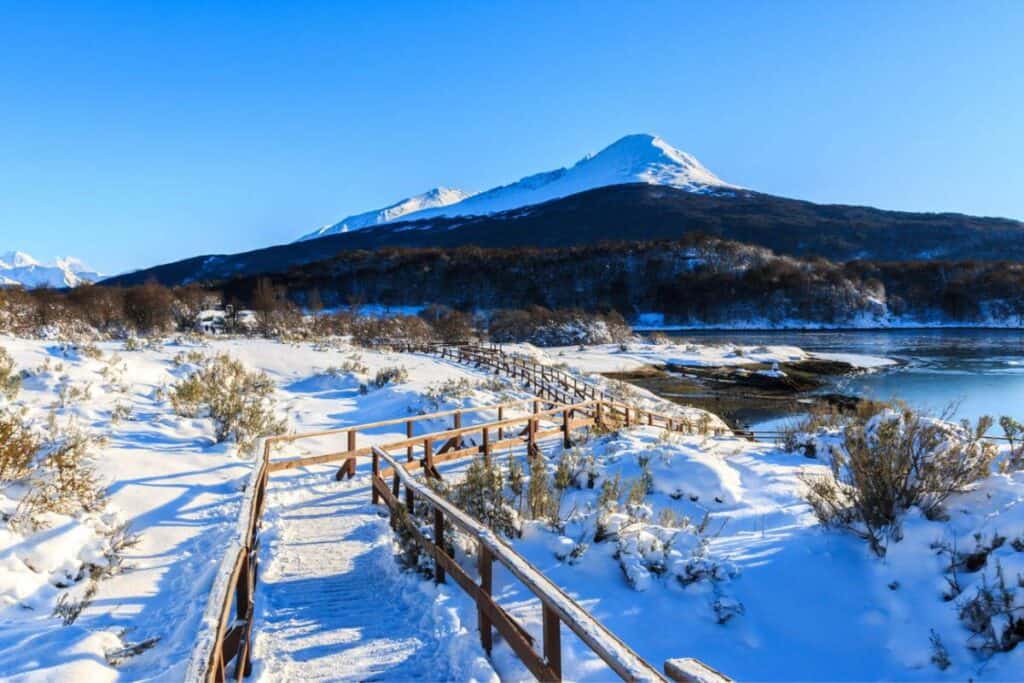
The Laguna Esmeralda trek operates year-round, including in winter. When the lagoon and the surrounding peat bogs are covered in snow, the landscape transforms into something that many visitors describe as the most beautiful thing they have ever seen in Patagonia. The 8-hour round trip requires waterproof footwear with good grip (or snow boots) and trekking poles. In conditions of very deep snow or active heavy snowfall, the tour may be rescheduled for safety. Check availability and conditions when booking.
The Beagle Channel in Winter
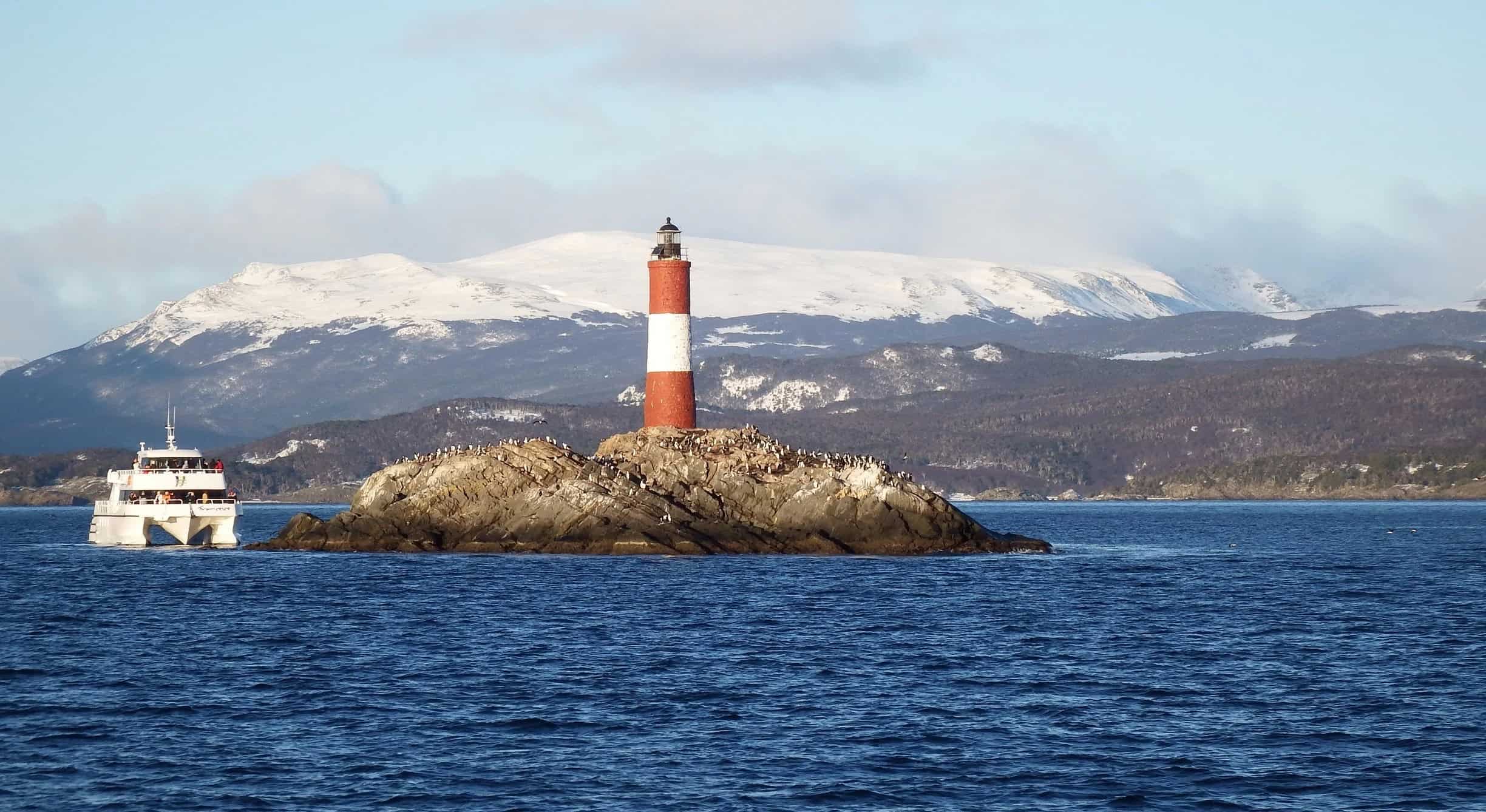
Navigating the Beagle Channel in winter is a different experience from summer — not better or worse, but radically distinct. The Darwin mountain range on the Chilean side is completely snow-covered, creating a dramatic backdrop for the sea lions on the rocks, the Les Eclaireurs Lighthouse and the seabirds. The low winter light — the sun never rises high in the sky — produces cinematic golden and blue tones over the water. Dress in multiple layers for the deck. Those who do the channel in winter consistently rank it among their most memorable travel experiences.
💡 What to bring on winter tours? For the Beagle Channel in winter: three layers of clothing, beanie and gloves. For Laguna Esmeralda with snow: waterproof footwear with good grip (or snow boots), trekking poles and thermal layers. The tour provides guidance but not cold weather gear.
July: The Exception in Winter
July is the exception to winter's low-season character. Argentine winter school holidays (vacaciones invernales) fall in July, bringing a surge of domestic tourists to Ushuaia for skiing at Cerro Castor and snow experiences. During this period, accommodation prices rise significantly, tours fill up quickly and the city has an animated, festive atmosphere. If you want the quiet and affordable winter experience, plan for June or August. If you want winter with a livelier scene, July is your month — just book at least a month ahead.
Advantages and Disadvantages of Winter
- ✅ Advantages: Skiing at Cerro Castor, snow-covered Laguna Esmeralda (spectacular), Beagle Channel with snow-covered mountains, lowest prices of the year (except July), fewer tourists (except July), unique 'end of the world in winter' experience.
- ❌ Disadvantages: Real cold and reduced daylight hours (7–8 hrs), some activities restricted by extreme snowfall, requires special gear.
Spring (September–November): Ideal for a First Visit
Spring Weather in Ushuaia
Spring in Ushuaia (September through November) is a season of transition and growing energy. Temperatures range from around 2°C in early September to 13°C by November. Days lengthen progressively, and by November you have nearly 15 hours of daylight. September and October are the windiest months of the year in Ushuaia — the westerly winds arrive with particular force in spring. By November, the wind generally eases and conditions become much more pleasant.
The Awakening of Fuegian Nature
In spring the lenga forests begin to bud — the bright lime-green of new leaves is one of nature's most vivid spectacles. Migratory birds return to the Beagle Channel and the forests. Wildflowers appear in the clearings of Tierra del Fuego National Park. The landscape shifts from the austere winter palette to something alive and full of renewal. Penguins begin arriving at Martillo Island from October, with the colony building through November and December.

Why It's Ideal for a First Visit
Spring — especially October and November — offers an excellent balance for first-time visitors. All four Mundo Austral tours operate at full schedule. There are significantly fewer tourists than in summer, so you get a more intimate experience of the trails and navigations. Accommodation prices are moderate — well below the summer peak. And the lengthening days give you plenty of light for outdoor activities without the logistical pressure of high season.
The penguin colony at Martillo Island is not yet complete in October (it reaches its maximum in December–January), but you can still see penguins from October onwards — and you'll have far fewer people around you than in January.
Advantages and Disadvantages of Spring
- ✅ Advantages: Fewer tourists than in summer, moderate prices, nature in renewal, progressively longer days, penguins arriving from October, all tours available.
- ❌ Disadvantages: Stronger winds (especially September–October), first weeks still cold with traces of snow in the city, the penguin colony is not complete until December.
Month-by-Month Table: Weather, Light, Price and Highlights
| Month | Avg. Temp. | Daylight hrs | Accomm. price | Tourism | What stands out |
|---|---|---|---|---|---|
| December | 8–17°C | ~17–18 hrs | 🔴 High | 🔴 Many | Very long days, penguins arriving, Beagle Channel with perfect light |
| January | 8–17°C | ~17 hrs | 🔴 High | 🔴 Many | Fuegian king crab, complete penguin colony, full trekking |
| February | 8–16°C | ~15 hrs | 🟠 Medium-high | 🟠 Quite busy | End of penguin season, last king crabs, stable weather |
| March | 5–13°C | ~13 hrs | 🟡 Moderate | 🟡 Moderate | First autumn colors on high peaks, last king crabs, fewer people |
| April | 2–10°C | ~11 hrs | 🟢 Low | 🟢 Few | Autumn peak: lenga beeches in red, orange and gold, ideal for photography |
| May | 0–7°C | ~9 hrs | 🟢 Low | 🟢 Few | Late autumn, forests in transition, first frosts in the city |
| June | -2–5°C | ~7–8 hrs | 🟢 Low | 🟢 Few | Cerro Castor opens, Laguna Esmeralda with snow, minimum prices |
| July | -2–4°C | ~8 hrs | 🟠 Medium-high | 🟠 Quite busy | Argentine winter holidays, peak skiing, lively city, prices rise |
| August | -1–6°C | ~9 hrs | 🟢 Low | 🟢 Few | Ski season closing, snow, Beagle Channel with snow-covered mountain range |
| September | 1–8°C | ~11 hrs | 🟢 Low | 🟢 Few | First signs of spring, receding snow, strong winds |
| October | 3–11°C | ~13 hrs | 🟡 Moderate | 🟡 Moderate | Penguins arriving at Martillo Island, lengas budding, days lengthening |
| November | 5–14°C | ~15 hrs | 🟡 Moderate | 🟡 Moderate | Full spring, penguin colony forming, no crowds |
💡 Note on prices: Accommodation prices in Ushuaia can vary greatly between establishments and how far in advance you book. The table reflects general trends. In high season (Dec–Feb and July) availability is limited and prices rise week by week. Booking in advance is always advisable.
Tours by Season: What to Do in Each Period

Beagle Channel — Sea Lions and Lighthouse
In December and January the afternoon light on the Beagle Channel is exceptional. With 16–17 hours of light, you can take the 15:00 departure and return with perfect light for photography. The sea lions on the rocks, the Les Eclaireurs Lighthouse, the seabirds and the mountain range in the background form one of the most beautiful nautical landscapes in Patagonia. In winter the experience is colder but equally impressive with the snow-covered mountain range in the background.
In winter, the Beagle Channel is navigated with the Darwin mountain range completely snow-covered in the background. The low golden light of the few solar hours creates a cinematic atmosphere. Warm clothing is required, but those who do it in this season speak of a unique experience.
Tierra del Fuego National Park
In autumn the Tierra del Fuego National Park transforms into one of the most visually spectacular destinations in South America. The lenga beeches along the trails and shores of Lago Acigami turn vivid shades of red, orange and gold. The End of the World Train passes through the snowy forest with a completely different look from summer — the colors of the surrounding forest make every photograph extraordinary. April is the peak month for autumn colors.
In summer the National Park is lush and green, with long days that allow you to fully explore the trails along the Beagle Channel coast. The lake and forest reflect the extended sunlight, and the fauna — birds, foxes, beavers — is more active. The End of the World Train runs at full frequency. The park is at its busiest, but the landscape rewards every visitor.
Laguna Esmeralda Trek
The Laguna Esmeralda covered in snow is one of the most breathtaking landscapes in Ushuaia. The 8-hour trek passes through snowy native forest, over frozen peat bogs and up to the lagoon, which in winter reflects the surrounding white peaks with a surreal stillness. The trail requires waterproof footwear with solid grip or snow boots. Poles are essential. The experience is demanding but those who complete it consistently describe it as the highlight of their trip to Ushuaia.
In summer Laguna Esmeralda lives up to its name — the turquoise-green water of the glacier-fed lagoon is stunning under the long summer light. The trail passes through dense lenga forests, crosses peat bog sections and arrives at the lagoon with the snowy peaks of Chile and Argentina behind it. The 14 km round-trip route has a gentle elevation gain and is accessible to fit walkers of most ages.
Lakes 4×4 — Escondido and Fagnano
In winter the Lagos 4×4 route becomes an adventure through a snow-covered landscape. The crossing of Paso Garibaldi with snow-covered peaks on all sides is spectacular. Lakes Escondido and Fagnano — the largest lakes in Tierra del Fuego — reflect the winter sky with an almost arctic stillness. The 4×4 vehicles handle snowy and icy roads. The Fuegian lunch included is especially welcome after a morning in the cold.
The Lagos 4×4 is the most versatile of Ushuaia's tours — it delivers a completely different visual experience in each season. Autumn brings the golden lenga forests along the route; summer offers green valleys and clear lake waters; spring presents wildflowers and active wildlife; winter gives snow and dramatic mountain scenery. The off-road format and the included Fuegian lunch make it a complete day regardless of the season.
When to Book: Required Lead Time by Season
Summer (December–February): Book 3 Months or More in Advance
Summer is Ushuaia's high season and demand is intense. Accommodation — especially mid-range and good-value options — fills up fast. The most popular tour departures (Beagle Channel afternoon, Laguna Esmeralda) sell out days or weeks before the date. If you are planning a December, January or February trip, the ideal is to confirm your tours and accommodation at least 3 months before departure. Prices also rise week by week as the dates approach, so early booking saves money as well as availability.
July (Winter School Holidays): Book at Least 1 Month in Advance
July is the exception in winter's otherwise quiet calendar. Argentine winter school holidays bring a significant surge of domestic tourism to Ushuaia for skiing at Cerro Castor. Hotels near the ski resort and in the city fill up, and tour availability tightens. For a July trip, aim to book at least 1 month in advance — and for the most popular accommodation, more is better.
Autumn (March–May): 2–3 Weeks in Advance
Autumn is a shoulder season with much more relaxed booking dynamics. In most cases, 2–3 weeks ahead is sufficient to secure your preferred tour dates and reasonable accommodation. March is slightly busier than April and May (summer visitors are still trickling out), so for peak autumn color photography (April), even shorter notice is often fine.
Spring (September–November): 2–3 Weeks in Advance
Spring follows similar patterns to autumn. October and November are the busiest spring months, but availability is generally still comfortable with 2–3 weeks of advance booking. November, being the closest month to summer, does start to see increased demand — if you're traveling in late November, giving yourself 3–4 weeks of lead time is a good idea.
Winter Outside July (June and August): Can Book with Less Lead Time
June and August are the quietest months in Ushuaia. Tour availability is wide open and accommodation has plenty of options. That said, it is always better to confirm your tour dates in advance to ensure you don't miss your preferred options — and to allow the team to check conditions (especially for snow-dependent activities like Laguna Esmeralda). A week or two ahead is generally sufficient in these months.
Our recommendation regardless of season: book your tours before you book your flights. The tours define your itinerary — once you know which days you'll do the Beagle Channel, the National Park and Laguna Esmeralda, everything else falls into place. It's much easier to adjust flights than to rearrange a full tour schedule in destination.
What Clothes to Bring to Ushuaia by Season
The Layering System: Mandatory Year-Round
The single most important thing to understand about dressing for Ushuaia is the layering system. Regardless of season, you need three functional layers:
- Base layer (inner): Thermal or moisture-wicking fabric (merino wool or synthetic). Its job is to keep you dry by moving sweat away from your skin. Cotton kills — it absorbs moisture and keeps you cold and wet. Never use cotton as a base layer in Ushuaia.
- Mid layer: Fleece, down or synthetic insulating jacket. Its job is to retain heat. Can be removed when you warm up on a trek.
- Outer layer: Waterproof and windproof shell jacket (and ideally waterproof trousers for heavy weather). Its job is to keep wind and rain out while allowing moisture to escape. This is non-negotiable in Ushuaia in any season.
Even in summer, all three layers must be in your daypack when you go on any tour. The weather changes too quickly in Ushuaia to leave layers at the hotel.
Specific Clothing by Season
3-layer system always. Lightweight thermal base. Medium-weight fleece or down jacket. Waterproof shell jacket (essential). Comfortable waterproof hiking boots or trail shoes. Waterproof trousers for trekking. Sunscreen (UV is intense in the south even on cloudy days). Light beanie and gloves for navigations. Small backpack for layers.
3-layer system with warmer mid layer than summer. Medium-weight thermal base. Warm fleece or mid-weight down jacket. Waterproof shell. Waterproof hiking boots (more important than in summer as trails can be muddy). Warm beanie. Gloves. Scarf or neck gaiter from May. Waterproof trousers.
Full 3-layer winter system. Heavyweight thermal base (merino preferred). Warm down or synthetic puffy jacket. Waterproof and windproof outer shell. Waterproof insulated boots (or waterproof hiking boots + thermal socks). Warm wool beanie. Insulated gloves. Scarf or balaclava. Crampons or microspikes for icy paths. Trekking poles for snowy treks.
3-layer system. Medium thermal base. Warm fleece (heavier in September, lighter in November). Waterproof shell (wind is strongest in September–October). Waterproof hiking boots. Gloves and beanie (essential in September, still advisable in November). Sunscreen from October. Be ready for all weather in a single day — pack everything.
⚠️ What you should never do: Go on a tour in Ushuaia without a waterproof jacket, with jeans as the only leg covering (they get soaked and don't dry), or with city shoes (sneakers) for trekking. These are the three most common mistakes tourists make that can turn a beautiful tour into an uncomfortable or even dangerous experience.
Book Your Ushuaia Tours — Year-Round
Mundo Austral's 4 tours operate year-round. Beagle Channel, National Park, Laguna Esmeralda and Lakes 4×4.
Frequently Asked Questions About When to Visit Ushuaia
The most common questions from travelers about the best time to go to Ushuaia.