
Fuegian centolla: Ushuaia's signature dish

If there is one dish that defines Ushuaia's gastronomy, it is Fuegian centolla (Lithodes santolla). This is no ordinary crab: it is the king of the seafood of the far south, a species of giant crab that inhabits the waters of the Beagle Channel and the South Atlantic at depths of between 50 and 400 metres, in waters that in winter drop to temperatures of 2 or 3 degrees Celsius. Those extreme conditions are exactly what make its meat so firm, sweet and exceptional.
An adult centolla can weigh between 1.5 and 4 kilos, with legs extending up to 70 centimetres. The meat is concentrated mainly in the legs and claws — white, fibrous, slightly sweet, with a clean sea flavour that needs few accompaniments to shine. It is one of those ingredients that good chefs often say you should "cook with respect": the less you intervene, the better it behaves.
🦀 How centolla is fished in the Beagle Channel
Centolla fishing in Tierra del Fuego is regulated by the provincial Fisheries Sub-secretary with annual quotas and an official season running from September to March. Local fishermen use nasas (wire cages) laid on the channel bed at various depths. Each boat can work up to hundreds of nasas per day, but controls are strict to prevent overfishing of a species that took decades to recover after the pressure it endured in the 1980s.
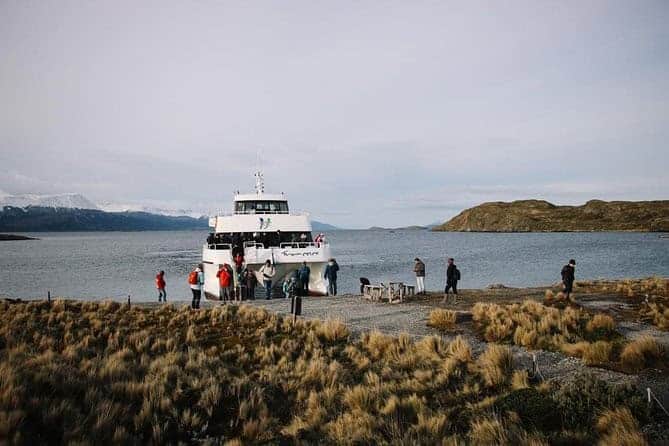
The Beagle Channel, that body of water separating Argentina from Chile with snow-capped mountains in the background, is one of the world's most spectacular fishing areas. The vessels leave very early in the morning and return at midday with the day's catch. Many restaurants in the centre receive their centollas directly from local fishermen each morning — that guarantees a freshness that nothing transported can match.
📅 Centolla season: when to go
The legal centolla season runs from September to March, but not all months are equal. The best months are October, November and December, when the centollas have the fullest shells, the most abundant meat and the most pronounced flavours. In January and February quality remains very good, although tourist demand can mean restaurants run out of stock early in the week.
⚠️ Important: If you're travelling between April and August, fresh centolla is not available: fishing is banned by law to protect the species' reproduction. In those months you can get centolla in cans (which is quite good) or in some preparations using centolla frozen from previous seasons, but it's not the same as fresh.
🍽️ How centolla is eaten in Ushuaia
The most traditional way, preferred by locals, is centolla boiled plain: simply cooked in sea water or salted water, with no other additives, served warm and accompanied by clarified butter or a squeeze of lemon. It's the most honest way to understand the real flavour of the product. To eat it, restaurants usually provide a nutcracker and tongs to open the legs — the process itself is part of the experience.
Beyond the classic version, in Ushuaia restaurants you'll find centolla in various preparations:
- Centolla gratin: shredded centolla meat mixed with cream, cheese and fresh herbs, served in the shell and gratin-baked. Very popular in classic restaurants.
- Centolla chowder: American-style creamy soup with centolla meat, potato, onion and cream. Perfect for cold days, which in Ushuaia is most of the year.
- Centolla empanadas: one of the most sought-after bites in the city. The dough is almost always homemade and the filling mixes shredded centolla with onion, pepper and sometimes a touch of black hake.
- Centolla salad: in more modern versions, centolla legs on green leaves, avocado, cucumber and citrus dressing. A refreshing option for the Fuegian summer.
- Centolla pasta: some author restaurants use it as a filling for sorrentinos or homemade tagliatelle.
The freshest centolla in Ushuaia is available on Monday, Wednesday and Friday mornings, when most vessels return with the catch. If your visit falls on those days, arrive at the restaurant early or book in advance: the best specimens go before midday. Restaurants located on the waterfront or near the port have more direct access to first-hour suppliers.
💰 Reference price for centolla 2026
At a restaurant, a whole centolla (between 1.5 and 2 kg) is around $25,000 to $40,000 ARS per person depending on the establishment and the size of the piece. Individual portions (half centolla or meat preparations) are more accessible and run around $15,000 to $22,000 ARS. Centolla empanadas sell for between $3,500 and $6,000 ARS each at delis and cafés in the centre. At the takeaway market, a whole cooked centolla costs between $18,000 and $30,000 ARS depending on size.
💡 For international tourists: prices in Argentine pesos make Fuegian centolla accessible for those arriving with dollars or euros. A whole centolla at a mid-range restaurant is equivalent to between USD 20 and USD 40 depending on the exchange rate — significantly cheaper than anywhere else where you can get seafood of this quality.
Magellanic lamb: differences from Calafate Patagonian lamb
Lamb is the second great pillar of Fuegian gastronomy. If you already know the Patagonian lamb of El Calafate, the Fuegian variety will seem familiar but different — and that difference is worth understanding before ordering.
Magellanic lamb from Tierra del Fuego is raised on estancias at the far south of the island and in the province of Magallanes (Chile), in a territory where the climate is colder, wetter and windier than the dry Patagonian steppe of Santa Cruz. Winter temperatures drop much more and the grass the animal eats — mainly coirón and other native Fuegian grasses — has a different nutritional profile from that of the continental steppe.
🐑 The differences you notice on the plate
Those rearing conditions produce meat with its own characteristics. Compared to continental Patagonian lamb, Fuegian meat tends to be somewhat fattier and more intense, with a more pronounced covering fat layer that local chefs consider essential for the flavour. The flavour is deeper, slightly more "wild", with less sweetness than warmer-reared lamb and a greater concentration of umami flavours.
For the classic spit — the lamb on the cross, butterflied and cooked beside the fire for three or four hours — Fuegian lamb is excellent: the covering fat melts slowly and bastes the meat during cooking, creating a caramelised surface and a very tender internal texture. Many grill masters in the region prefer Fuegian lamb for the estancia asado, where the slow cooking ritual is celebrated as a ceremony.
In Ushuaia restaurants lamb appears mainly as:
- Spit-roasted lamb (on the cross): the most authentic version, offered only by some specialised restaurants and grill houses. It's prepared in advance and you generally need to tell the restaurant a few hours ahead.
- Grilled lamb pieces: shoulder, leg and rack are the most ordered cuts. Straightforward, uncomplicated.
- Lamb stew or casserole: a slow preparation with vegetables and herbs that appears in the most home-style restaurants and in the coldest months of the year. The most comforting version of the ingredient.
- Fuegian lamb rack: in more modern restaurants, the rack (frenched cutlets) is the most elegant presentation, with herb crusts and austral berry sauces.
If you have the opportunity to do an excursion to a Fuegian estancia, the spit-roasted lamb served there is one of the most authentic gastronomic experiences in all of Patagonia. Estancias like Las Cotorras or Harberton usually include a lamb asado in their tourism offering. It's not the same as eating it at a restaurant in the centre: it's the lamb cooked in the same field where it was raised, with views of the lagoon or the channel.
🍷 What to pair with Fuegian lamb
Patagonian wines pair very well with Fuegian lamb: a Malbec from Mendoza or a Pinot Noir from Río Negro perfectly balance the fat and intensity of the meat. For those who prefer beer, Beagle Negra — a dark stout produced in Ushuaia — is a surprisingly good pairing with lamb stew or the estancia asado. Also works well is Fuegian artisan cider, less well known but available in some bars in the centre.
Trout and black hake in Ushuaia
Sea and river produce doesn't stop at centolla. Ushuaia has two fish that deserve special attention: rainbow trout from Fuegian rivers and lakes and black hake (Patagonian toothfish), a deep-water fish that in recent years has started appearing on the menus of the city's most sophisticated restaurants.
🐟 Fuegian rainbow trout
The rivers and lakes of Tierra del Fuego — the Olivia, the Lapataia, Lago Fagnano, Lago Escondido — are home to rainbow trout (Oncorhynchus mykiss), introduced to the region in the early 20th century but completely adapted to the austral environment. In these cold, clean waters, trout grows more slowly than in warmer waters and develops a firm flesh of intense pink colour, with a flavour far more delicate and complex than farmed trout.
Fuegian trout appears on most Ushuaia restaurant menus in various preparations. The most common is grilled trout with herb butter — simple and perfect. It's also prepared baked with lemon and capers, en papillote with local vegetables, or cold as ceviche for summer days. In more creative restaurants you can find cold-smoked trout, a process done here with lenga wood (the most characteristic tree of the Fuegian forest) that imparts a completely different aroma from industrial smoking.
🎣 For anglers: Tierra del Fuego National Park and the Fuegian river areas have authorised zones for trout sport fishing. With a provincial licence (easily obtained in the centre) you can go fishing on the Río Olivia or the Lapataia. If fishing for trout at the End of the World isn't on your travel experience list, perhaps it should be.
🐠 Black hake: Ushuaia's most exclusive ingredient
Black hake (Dissostichus eleginoides), known internationally as Patagonian toothfish or Chilean sea bass, is one of the world's most prized fish in gourmet markets in Europe, Japan and the United States — and in Ushuaia it is fished in the waters of the South Atlantic and the Beagle Channel. This is no ordinary hake: it is a deep-water fish (between 500 and 3,000 metres) with very fatty white flesh, an almost buttery texture and a very gentle, delicate flavour suited to high cuisine preparations.
For years, most of the black hake quota fished in Tierra del Fuego was exported directly to Asia and Europe. But in recent years some Ushuaia restaurants started incorporating it into their local menus, and today it is possible to eat it in the city where it is fished, which is a rather special experience. The most common preparation in local restaurants is pan-seared black hake with a wild berry glaze or with lemon butter and capers. The result is a texture similar to Japanese black cod, but with unique austral flavours.
⚠️ Limited availability: black hake doesn't appear on every Ushuaia restaurant's menu — it's expensive and the quota is limited. If you want to try it, check with Chez Manu, Kaupé or Volpe e Uva when booking. They don't always have it on the menu.
The best restaurants in Ushuaia

Ushuaia's gastronomic scene has grown enormously in the last decade. Today the city has everything from classic restaurants specialising in centolla that have been operating for decades, to more modern author cuisine offerings working Fuegian ingredients with contemporary techniques. There are also good budget options for a solid meal without overspending. Here's the best in each category.
🦀 Classic restaurants — traditional Fuegian cuisine
Considered one of the best restaurants in Ushuaia for many years. Located on Monte Susana, with a panoramic view of the Beagle Channel and the snow-capped mountains of Chile that is worth the trip on its own. The menu works with the best of Fuegian cuisine — centolla, lamb, trout — in preparations that respect the produce but elevate it with technique. The centolla gratin and the lamb rack are masterpieces.
The most centolla-focused restaurant in the entire city. El Viejo Marino works directly with local fishermen and has fresh centolla virtually every day of the season. No complications: the product speaks for itself. Portions are generous, the atmosphere is informal and nautical, and service is experienced. The best place to eat centolla boiled plain, without artifice.
A classic in central Ushuaia with a menu balanced between Fuegian seafood and meats. María Lola stands out for its centolla gratin and for the grilled lamb in various cuts. Warm, family atmosphere, perfect for an unpretentious dinner but with excellent ingredients. One of the city's best value for money.
✨ Modern restaurants — for a special evening out
The most elegant restaurant in Ushuaia and probably the most romantic. Kaupé occupies a manor house with views over the channel and forest, with warm lighting and an author cuisine offering that works Fuegian ingredients with sophistication. The menu changes with the season and always has a selection of centolla, trout and lamb in versions that surprise. Ideal for an anniversary dinner or a special evening.
One of the most interesting offerings Ushuaia has today. Author cuisine with Fuegian ingredients, situated with a direct view of the Beagle Channel. The menu blends Mediterranean influences with austral flavours — centolla risottos, fresh pasta with smoked trout, Fuegian meats with wild berry reductions. Carefully curated wine list. For those who want something different from the classic centolla restaurant.
💚 Budget options — eating well without overspending
Ushuaia's most beloved deli. El Rincón is where locals go when they want to eat well without overspending: centolla empanadas, lamb stews, cazuelas and freshly made fried dough. Without any pretensions, generous portions, genuine ingredients and a warmth in the service you notice from the moment you walk in. If you want to understand how real Ushuaia residents eat, this is the place.
One of the most well-known spots in Ushuaia among both travellers and locals alike. Tante Sara is a café-restaurant serving breakfasts, lunches and afternoon teas with quality home cooking: soups, savoury tarts, hot sandwiches, pastries. The atmosphere is warm, always busy, and prices are very reasonable for the city. The chocolate cake and tea with pastries are a ritual for those returning from an excursion.
For when the budget is tight or you simply fancy a well-made lomito (steak sandwich). Martinica is Ushuaia's reference for meat sandwiches: the complete lomito (steak, ham, cheese, lettuce, tomato, egg) is generous and well executed. They also have lamb and chicken options. The cheapest place to eat well in the centre.
Fuegian craft beer: Beagle, Cape Horn and the culture of the cold
Craft beer in Ushuaia is not a recent trend imported from Buenos Aires — it is a tradition rooted in the extreme climate and in the culture of the communities that gradually settled at the End of the World. The cold, the isolation and the need to find ways to gather with others around something warm or comforting drove the development of a local brewing scene that today has its own personality.
🍺 Beagle: Ushuaia's emblem beer
Cervecería Beagle is the most well-known and most identified with Ushuaia. Founded by local entrepreneurs, Beagle takes its name from the famous HMS Beagle that Darwin used on his voyage to the End of the World in the 19th century, and from the Channel that bears the same name. Its main range includes:
- Beagle Rubia (Kölsch): light, refreshing, with floral aroma. The most approachable for those not used to craft beers. Perfect to accompany plain boiled centolla.
- Beagle Roja (Amber Ale): intense copper colour, with caramel and toasted malt notes. More body and flavour than the blond. Pairs well with grilled lamb.
- Beagle Negra (Stout): the most substantial. Dark, with notes of coffee and bitter chocolate, creamy body. Ideal for the coldest days, accompanied by a lamb stew or a platter of Fuegian cheeses and cured meats.
- Seasonal editions: Beagle periodically releases special editions with local ingredients such as calafate, austral wild berries and Fuegian nuts. Worth asking what's available.
⛵ Cape Horn: the world's most southerly beer
Cervecería Cape Horn is more boutique and less well known than Beagle, but has a very interesting spirit: its visual and conceptual offering is completely inspired by the nautical culture of the Beagle Channel and the history of the navigators who attempted to round Cape Horn. The names of its styles refer to historic expeditions, Fuegian winds and climatic phenomena of the far south.
Cape Horn is especially valued by more discerning beer lovers. Its IPAs have more hops and bitterness than Beagle, making them ideal for those coming from the world of American craft beers. Its seasonal styles tend to include Porters and Barleywines designed for the Fuegian winter.
The best way to try Fuegian beers is at a tasting session at the brewery bar. Beagle has its own venue in the centre where you can order a tasting board with all available styles in small glasses. If you arrive after an excursion to the National Park, that board with a platter of local cheeses and cured meats is going to be one of the best moments of the trip.
🍻 Where to drink craft beer in Ushuaia
Beyond the breweries' own venues, several taverns and bars in the centre offer the Fuegian brands on tap. The Beagle brewery bar in the centre is the natural starting point. Other good spots for a pint are bars along Calle San Martín, the city's main gastronomic artery. Many restaurants offer Beagle on tap as an option alongside the wine list.
Artisan chocolatiers in Ushuaia
Patagonia's chocolate tradition finds its expression in Ushuaia in the form of a scene of artisan chocolatiers that combine the European heritage of immigration with the unique flavours of the austral forest berries. It's not an exaggeration to say that Ushuaia's chocolates are among the best in all of Argentina.
🍫 The three chocolatiers you must visit
The most recognised chocolatier in Ushuaia, with a selection of bonbons, tablets and truffles using austral forest berries. The bonbons filled with calafate, cherry and dulce de leche are the bestsellers. The shop has tastings, a warm atmosphere and very good souvenir presentation. An essential stop on any visit to Ushuaia.
Mamushka combines artisan chocolate with a very appealing visual concept. Their products have impeccable presentation and the flavours include original combinations like white chocolate with calafate, Fuegian berry truffles and double alfajores coated in dark chocolate. It's the chocolatier that appears in all the Instagram photos of tourists visiting Ushuaia.
A long-established Ushuaia venue combining chocolates with artisan pastry. El Turco is known for its homemade cakes, pastries and traditional confectionery in addition to the chocolates. Less focused on the premium segment than Laguna Negra or Mamushka, but with the charm of places that have been operating on the same corner for decades. Very good for an afternoon tea.
🎁 Gastronomic souvenirs: artisan chocolates from Laguna Negra or Mamushka are one of the best gifts to bring from Ushuaia. They have attractive packaging with Fuegian motifs (the Beagle Channel, the lighthouse, the National Park), unique flavours you can't find anywhere else, and a very accessible price for those arriving from abroad. A 250-gram assorted box costs around $8,000 to $15,000 ARS.
Beyond boxed chocolates, Ushuaia's chocolatiers are also ideal for an afternoon tea. Fuegian hot chocolate — thick, served with whipped cream and a sweet accompaniment — is almost obligatory on a cold day. And cold days in Ushuaia are plentiful throughout the year.
Artisan market and products to take home
Beyond restaurants and chocolatiers, Ushuaia has an interesting range of regional products you can buy to take home. The Mercado Artesanal in the centre — located on Calle San Martín — concentrates the greatest variety of local producers and is the best starting point for souvenir shopping.
🛒 The most sought-after products
Canned or preserved centolla: without doubt the most sought-after gastronomic souvenir from Ushuaia. Canned or jarred centolla is very good quality, requires no cold chain for transport and allows you to take the flavour of the End of the World home. The best-known brands are Punta Arenas and some local artisan productions. Make sure to buy it from places with good stock turnover to guarantee freshness.
Calafate jam: the calafate berry (Berberis microphylla) also grows in Tierra del Fuego and its jams, marmalades and jellies are excellent quality. The flavour is similar to blackberry but with a more pronounced acidity and a very intense violet colour. On toast with butter it's an experience. Also goes very well over soft cheeses.
Austral forest wild berry jams: the Fuegian forest has native berries like chaura, leñadura and fruits from various species not found anywhere else in the world. Some artisan producers in the region turn them into small-batch jams and jellies with unique flavours. Hard to find outside Ushuaia.
Chocolates with calafate and Fuegian berries: already mentioned in the previous section, but worth repeating: chocolates from local chocolatiers with Fuegian flavours (calafate, cherry, wild berries) make an excellent gift.
Calafate liqueur: less well known than the El Calafate continental version, but equally delicious. Deep violet colour, intense fruity aroma, sweet flavour with balanced acidity. Available in souvenir shops and some chocolatiers. There are also artisan Fuegian gin and vodka versions that have started appearing in recent years.
Fuegian sheep wool textiles: not exactly food, but the connection with lamb is inevitable. Some Tierra del Fuego estancias produce artisan items with wool from their own sheep — woven goods, socks, gloves and blankets that combine quality with authentic Fuegian identity.
The best time to explore Ushuaia's Mercado Artesanal is in the morning, between 10 and 12h, when the stalls are most fully stocked and producers most willing to explain what everything does. If you arrive in the afternoon of your last day before departure with half-empty bags, you'll wish you'd come sooner: the variety and quality of local products tends to pleasantly surprise.
Price guide in Ushuaia 2026
Prices in Ushuaia are somewhat higher than in El Calafate, given that virtually all consumer products must be imported to the island, and seafood has a high market value. Below is an Argentine peso reference to plan the gastronomic budget for the trip.
| Type of meal / outing | Range per person (ARS 2026) | Examples |
|---|---|---|
| Budget / deli / fast food | $12,000 – $22,000 | El Rincón, Lomitos Martinica |
| Artisan café and afternoon tea | $5,000 – $12,000 | Tante Sara, El Turco, Mamushka |
| Mid-range restaurant (without centolla) | $22,000 – $38,000 | María Lola, San Martín restaurants |
| Classic with whole centolla | $25,000 – $40,000 | El Viejo Marino, Chez Manu, María Lola |
| Grilled lamb (piece) | $20,000 – $35,000 | Chez Manu, María Lola, centre grill houses |
| Special restaurant / author cuisine | From $50,000 | Kaupé, Volpe e Uva, Chez Manu |
| Craft beer (pint) | $4,000 – $8,000 | Beagle, Cape Horn |
| Chocolates (souvenir box) | $8,000 – $25,000 | Laguna Negra, Mamushka |
| Preserved centolla (takeaway) | $15,000 – $30,000 | Mercado Artesanal, centre shops |
💡 Estimated daily budget: for a couple with a moderate travel style (breakfast at the hotel, lunch at a budget restaurant, dinner at a mid-range restaurant with a centolla portion), budget between $90,000 and $140,000 ARS per day for two people. If you want to dine at Kaupé or Chez Manu, add between $40,000 and $80,000 ARS extra that evening.
Practical tips: reservations, centolla season and where to find it freshest
Chez Manu and Kaupé need to be booked two or three days in advance in high season (November-February). El Viejo Marino generally accepts walk-ins but in the first half of January there may be a wait. If you have a special evening planned, book as soon as you arrive in Ushuaia.
The days of highest activity for centolla boats are Monday, Wednesday and Friday. If your visit coincides with those days, port restaurants have the freshest centolla. Arrive before 13h to secure the best specimens of the day.
If your main gastronomic goal is centolla, the best months are October, November and December. In January and February it's still available but tourist demand is high. From April to August there's no fresh centolla — only preserved.
In Ushuaia dinner is eaten late as in all of Argentina. Restaurants open for dinner from 19:30-20h. If you arrive hungry at 18h, the options are cafés like Tante Sara and fast food spots. Don't expect anything open for dinner before 19:30.
Ushuaia has low temperatures practically all year round. Even in summer nights are cold. That favours bowl dishes: centolla chowder, lamb stew and seafood soup are comforting in a way few things are. Don't limit yourself to cold dishes.
Canned centolla for taking home sells out quickly at busier shops in high season. If you've planned to buy it as a souvenir, don't leave it for the day of your flight. Better a couple of days before, so you don't end up empty-handed.
A detail few people know: in Ushuaia there is a custom of "mate on excursion". Many tour guides carry hot water and yerba (dried herb) in their vehicles, and the mate gets passed around on the way to the National Park or Laguna Esmeralda. If they offer it to you, accept it — it's part of the Patagonian culture and a genuine way to connect with the territory and local people.
Coming to Ushuaia? Book your tours with Mundo Austral
We're the local agency with 25 years of experience. Beagle Channel, National Park, Laguna Esmeralda and Lagos 4×4.
Frequently Asked Questions about gastronomy in Ushuaia
The most common questions from travellers about what to eat, where and when in Ushuaia.