Real temperatures — Don't be fooled
Winter in El Calafate is not extreme for someone who comes prepared. It is not like the Antarctic winter or Ushuaia's winter. El Calafate is a Patagonian steppe town — drier and a bit more temperate than the Andean destinations.
What these numbers don't show is the wind factor. In El Calafate, a day of 5°C with 60 km/h wind feels like -10°C. The Patagonian wind never rests at any time of year, but in winter it can be particularly brutal in exposed areas (glacier walkways, lake shore).
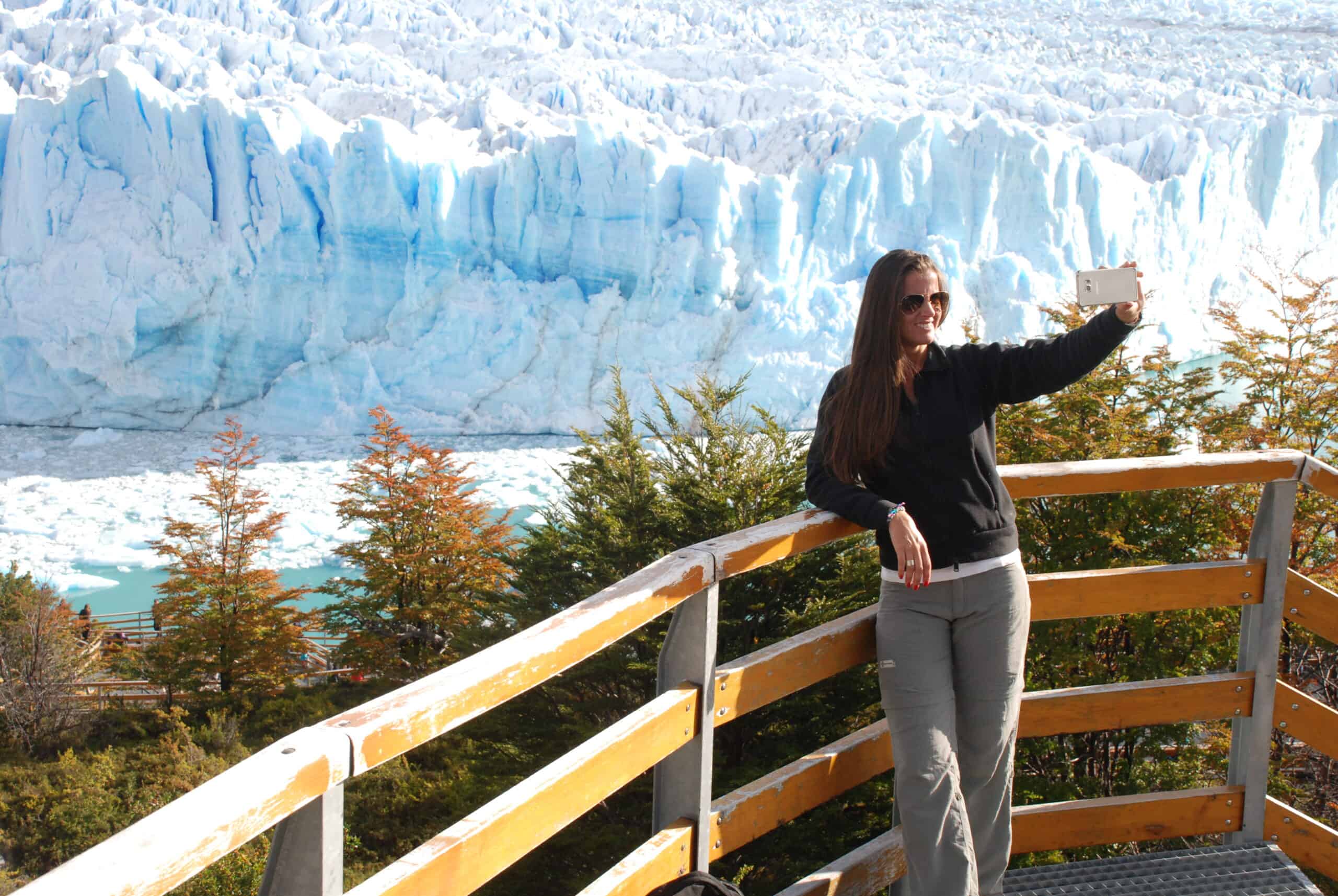
The town of El Calafate is protected from the Patagonian wind by the Sierra de Los Baguales to the north. That's why you can be having a quiet coffee on the pedestrian street at 8°C in the sun, and when you get to the Perito Moreno walkways (which are more exposed) you feel a cutting 80 km/h wind. Always bring your jacket, even if the hotel feels comfortable in shirtsleeves.
Which excursions operate in winter?
| Excursion | Operates in winter? | Notes |
|---|---|---|
| Perito Moreno Walkways | ✓ Yes | Open year-round |
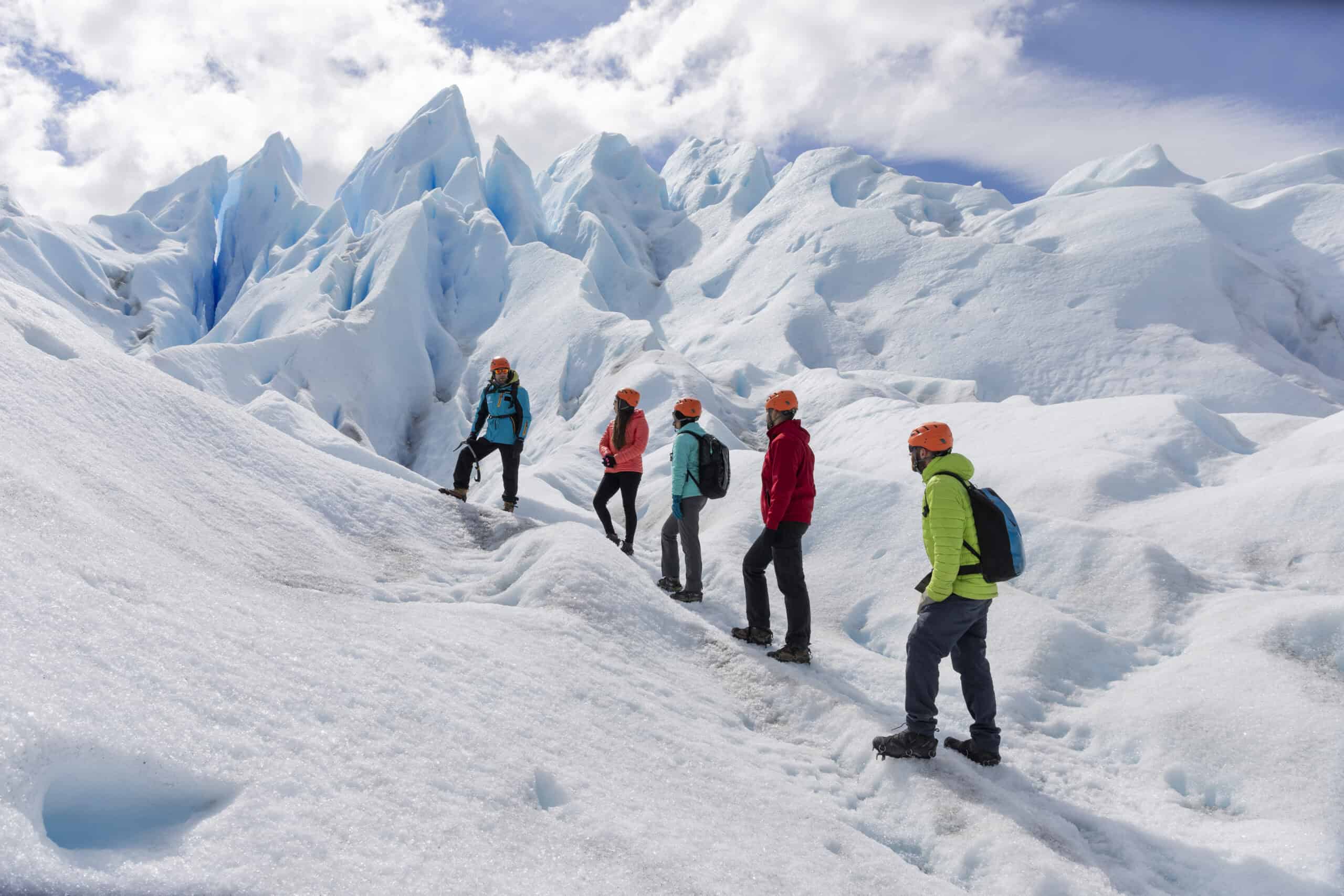
| Minitrekking on the ice | ✓ Yes | Operates year-round |
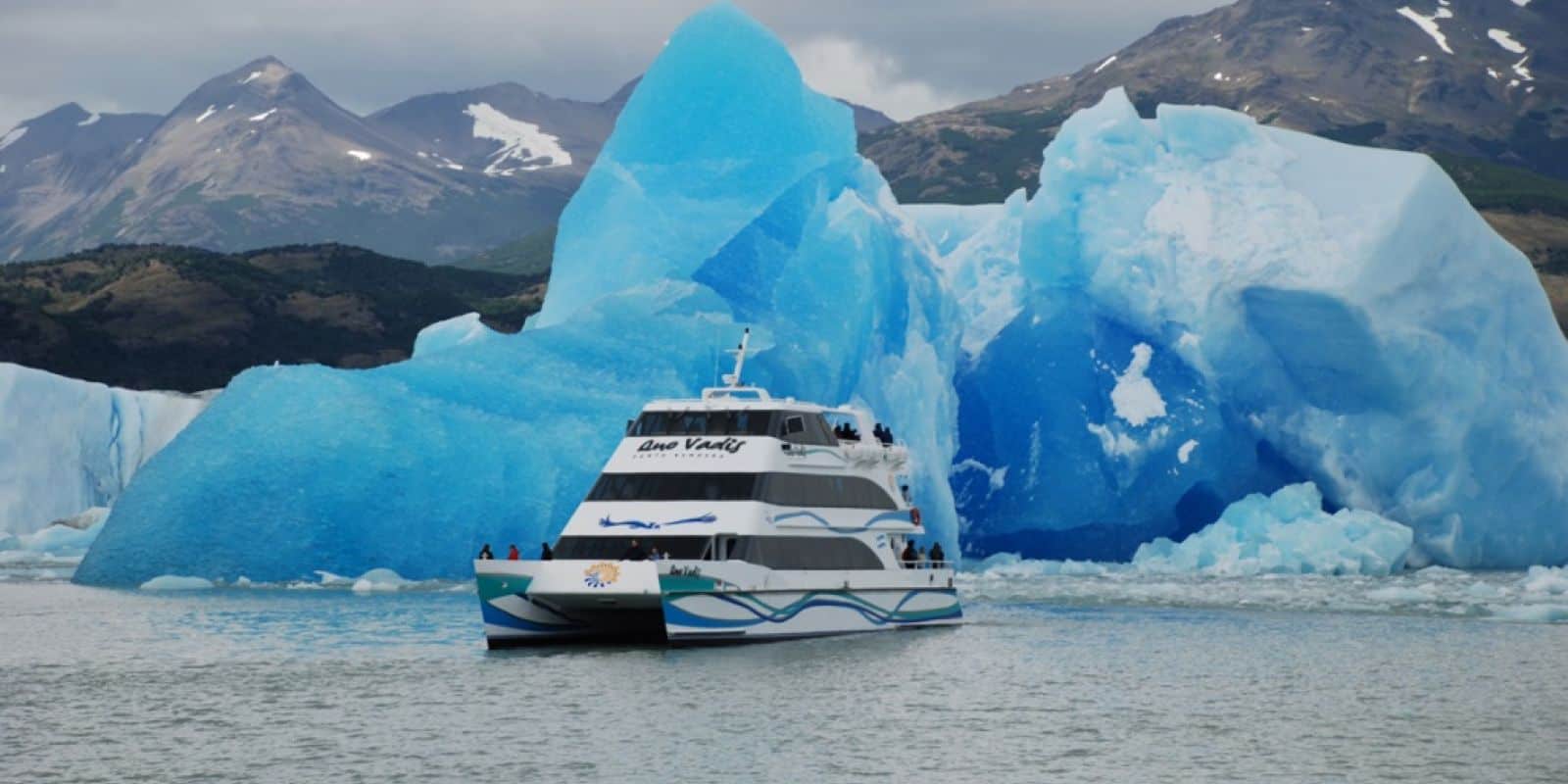
| Safari Azul | ✓ Yes | Reduced frequencies |
| Todo Glaciares Upsala | Limited | Check availability |
| Big Ice | ✗ No | Oct–Apr only |
| Full Day El Chaltén | Limited | Fewer frequencies, adverse weather |
| Torres del Paine | ✗ No | Does not operate from El Calafate |
| Laguna Nimez (reserve) | ✓ Yes | Open year-round |
The bluest ice of the year — The secret advantage of winter
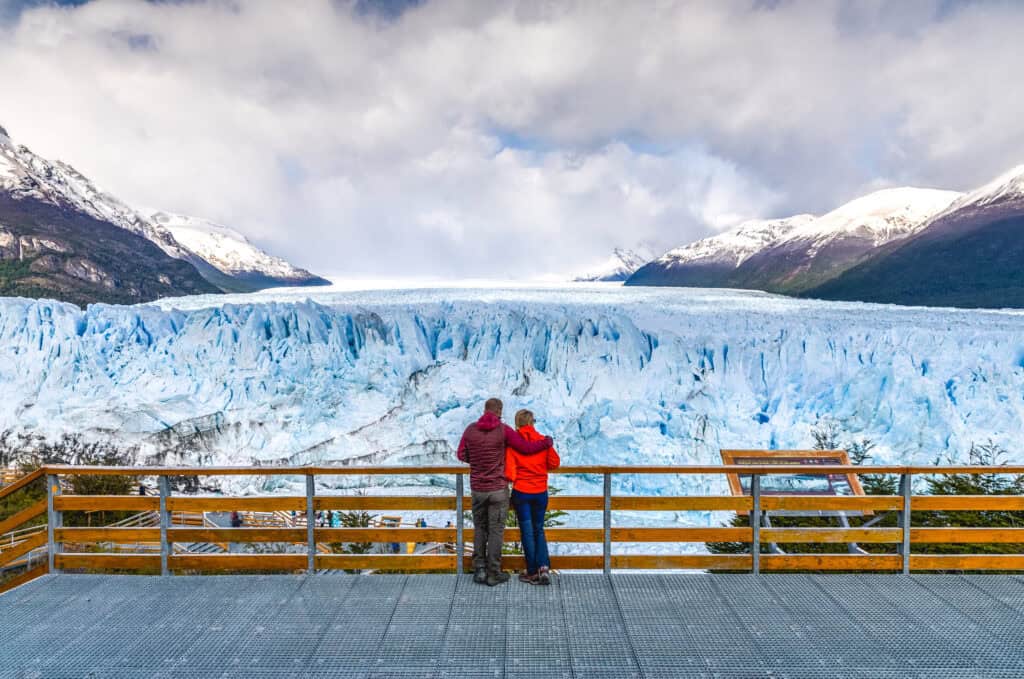
This is something that few tour guides mention in their low-season descriptions, but that nature photographers know very well: Perito Moreno glacier looks bluer in winter.
Why? In summer, up to 18 hours of daily sunshine melts the glacier's surface layer, creating a film of water that diffusely reflects light and makes the ice look whiter and more opaque. In winter, with less intense sun and fewer hours of light, the ice maintains its intact crystalline texture and the blue is perceived at full intensity.
Also, in winter the walkways have far fewer tourists. In summer you may have to wait to pass through some narrow sections. In July you can stand in front of the glacier in complete silence, listening only to the creaking of the ice and the occasional thunder of a calving event.
💡 Nature photographers seeking the perfect photo of Perito Moreno often go in June-July. The low-angle winter light (the sun never rises high above the horizon) creates long shadows on the ice and highlights textures that are overlit in other seasons.
Prices — The other great advantage
El Calafate in winter is significantly cheaper than in high season. This applies to practically everything:
- Accommodation: 30-50% cheaper. 4-star hotels that charge USD 200 per night in January charge USD 90-120 in July.
- Excursions: Some agencies have low-season prices 20-30% lower.
- Flights: Fares from Buenos Aires can be considerably lower, especially if you book in advance or take advantage of airline deals.
- Restaurants: Prices don't drop much, but there are shorter waits and more personalized service.
In July, El Calafate experiences the Argentine "Winter School Holidays" (second week of July), which is the only week with significant movement. Prices rise specifically that week. If you can avoid the school holiday week, prices drop considerably before and after.
Necessary clothing — No improvising
This is the aspect where people who don't prepare well make the most mistakes. Arriving at the glacier in winter with a denim jacket and canvas sneakers is an unpleasant experience. Here's what we recommend:
- Down or synthetic (puffy) jacket — Down fill is lightweight and very warm. Essential on the walkways.
- Waterproof outer shell jacket — To go over the down jacket if it rains or snows.
- Fleece or thermal sweater — As a mid-layer.
- Thermal base layer — Essential. Cotton retains moisture and cools you down. Use merino wool or synthetic.
- Waterproof trekking pants — Or thermal leggings + waterproof pants.
- Wool hat covering the ears — Indispensable at the glacier.
- Waterproof gloves — Wool gloves aren't enough if there's wind.
- Neck gaiter or buff — To protect your neck from the wind.
- Waterproof boots with grip sole — If there's snow on the ground or at the glacier, footwear without grip is dangerous.
- Sunglasses — The low winter sun reflects off the ice and can irritate your eyes.
Does it snow in El Calafate in winter?
This question is tricky. El Calafate is very dry: it receives less than 200 mm of rainfall annually (for context, Buenos Aires receives more than 1,000 mm). Snowfall is occasional and generally not very heavy.
In a typical winter you can expect 3-5 snowfall episodes during June, July and August. Each episode leaves 5-15 cm of snow that the dry Patagonian sun melts in 1-2 days. It's not like a ski resort where snow persists for weeks.
That said, when it snows in El Calafate, the town transforms into a fairy-tale postcard: snow-covered streets, Lago Argentino in grey tones with icebergs, the sierra with snow-capped layers. These are brief but very photogenic moments.
Flights and connections in winter
El Calafate airport (FTE) operates year-round. Aerolíneas Argentinas has direct flights from Buenos Aires (Jorge Newbery - AEP). LADE also operates with lower frequency.
In winter frequencies are reduced: in summer there can be 3-4 daily flights; in July there are 1-2. This means that if your flight is cancelled or there's bad weather, the next one may be the following day or the day after. It's worth having some flexibility in your itinerary and booking early.
⚠️ El Calafate airport can close due to dense fog (common in winter) or extreme wind. In high season this is rare because aircraft have more frequency options to choose from. In winter it can mean waits. We recommend not having tight connections from El Calafate.
Why do Europeans travel in winter?
Every July, El Calafate receives a good proportion of European tourists. There are clear reasons:
- July is summer in Europe: Their school holidays coincide with the Patagonian winter. Many are looking for a change of season.
- The cold doesn't deter them: For someone from Norway, Sweden, Germany or Scotland, -3°C with wind is perfectly normal. Patagonian winter doesn't intimidate them.
- Accessible prices: Compared to high seasons, in July the Argentine peso and local prices are more favorable relative to their currencies.
- Less crowding: Europeans seeking genuine nature prefer off-season destinations to avoid crowds.
- Perito Moreno operates the same: The signature excursion is available year-round, so they don't miss the main experience.
In July particularly German, French and Scandinavian travelers arrive. Many come as couples or pairs, with long itineraries including Buenos Aires, Bariloche, El Calafate and Ushuaia over 3-4 weeks. They don't mind the cold; they value the authentic experience.
Town activities in winter
Besides the glacier, El Calafate has its own life in winter:
- Laguna Nimez Reserve: This bird reserve on the shores of Lago Argentino is open year-round. In winter you can see southern flamingos, black-necked swans and many duck species. The winter light is perfect for bird photography.
- Lake Promenade: The coastal walkway in the town center has cafes, restaurants and bars. The view of the lake on clear days is impressive, with icebergs floating in the distance.
- El Calafate Magia Blanca: Some winters this fire and light festival is organized to illuminate the town center.
- Local restaurants: In winter restaurants have more availability. It's the season to slowly enjoy Patagonian roasted lamb and a glass of Mendoza wine.
- Craft shopping: Town center craft shops have more relaxed hours without the summer queues.
Ideal winter itinerary — 3 days in El Calafate
With 9 hours of sunlight and early-departing excursions, the key in winter is to organize yourself well from day one. This itinerary is designed to make the most of every hour of sun without rushing.
We always recommend doing Perito Moreno Glacier on the second day (not the first). You arrive rested from the journey, you get to know the town a bit the previous afternoon, and if the weather is cloudy you can reorganize. The Safari Azul is more flexible in timing and adapts better to the freer days. If you only have 2 days, choose the Glacier over any other excursion — always.
July vs August vs September — Which is the best month?
Not all months of the low season are the same. There are real differences in temperature, light, excursion availability and number of tourists that are worth knowing before choosing your travel dates.
| Month | Daytime Temperature | Excursions | Tourists | Prices | Daylight | Best for |
|---|---|---|---|---|---|---|
| June | -1°C to 7°C | Glacier + Safari Azul | Very few | Very low | ~9 hrs | Independent travelers, photography |
| July | -3°C to 6°C | Glacier + Safari Azul | Moderate (holidays) | Medium (holiday week) | ~9 hrs | Argentine families, Europeans |
| August | -2°C to 8°C | Glacier + Safari Azul | Few | Low | ~10 hrs | The sweet spot of winter |
| September | 2°C to 12°C | All (gradual opening) | Few-moderate | Low-medium | ~11-12 hrs | Trekking, strong wind |
June — The quietest month (and coldest)
June is the month with the fewest tourists of the year in El Calafate. Prices are as low as they get, restaurants are almost empty and the glacier walkways are practically yours alone. The trade-off: it's the coldest month (-1°C to 7°C daytime) with more frequent snowfalls. If you travel as a couple or solo and don't mind the cold, June is extraordinary for glacier photography. The low solstice light creates long shadows on the ice that simply don't exist in other months.
July — The busiest of winter
July has two faces: the Argentine winter school holiday week (generally the second week of the month) brings a wave of domestic tourists, especially families. Prices rise that specific week. Outside that week, July is as quiet as June. Europeans primarily choose July because it coincides with their summer holidays. It's the coldest month (-3°C to 6°C) but also the most photogenic if you manage a clear, sunny day.
August — The sweet spot of winter
August is the month we most recommend for those who want to combine manageable cold, good prices and available excursions. Temperatures are slightly better than July (-2°C to 8°C), there's a bit more daylight, and tourists are few because it doesn't coincide with any major Argentine long weekend. The main excursions continue to operate just as they do in July. If you can freely choose your dates, August is the most balanced winter choice.
September — The transition towards spring
September is technically already spring on the calendar, but in Patagonia the weather is still wintry: temperatures between 2°C and 12°C, winds that in this month reach their most intense peaks of the year, and the first days with more than 11 hours of light. The great advantage of September is that excursions start recovering their frequencies and some that were closed (such as Big Ice) are approaching their October reopening. Prices remain low. Wind is the main negative factor: September is the quintessentially windy month in Patagonia.
💡 If you can choose, August is the winter sweet spot. Somewhat better temperatures than July, fewer tourists than during the school holiday week, low prices and excursions operating without additional restrictions. Combined with the winter light that still favors glacier photography, August is the most balanced option for those not tied to fixed dates.
Where to stay in El Calafate in winter
In winter the accommodation offer is reduced compared to high season: some boutique hotels and small establishments close between June and August. However, the options available in all three categories are sufficient and convenient, and prices are considerably lower.
Most convenient area: the center
In winter, staying close to the town center has practical advantages that aren't as noticeable in summer. With few hours of light and cold, you don't want to walk 20 minutes from a remote hotel to the excursion meeting point or restaurants. The best winter hotels are within 5 blocks of the center, along Avenida del Libertador or parallel streets.
| Area | Advantages | Disadvantages | Approx. price (per night) |
|---|---|---|---|
| Center (Av. Libertador) | Steps from restaurants, excursion pick-ups, shops | May have street noise | USD 60-180 |
| Near center (up to 1 km) | Quieter, good views, several 4★ hotels | Cold walk or need a taxi | USD 80-220 |
| Outskirts / upper area | Panoramic lake views, total silence | Taxi essential, some reduced services | USD 120-350 |
Categories available in winter
- Budget (hostels and guesthouses): Several town center hostels operate in winter, though with fewer beds available. Prices from ARS 15,000-25,000 per night in shared rooms, or USD 25-40 for private. El Calafate Hostel and América del Sur Hostel usually maintain winter opening hours.
- Mid-range (3★ hotels and B&Bs): Hotels like Los Sauces or similar offer good value for money in winter, with breakfast included. Prices around USD 70-130 per night. Many have powerful central heating, ideal for cold days.
- Premium (4-5★ hotels): El Xelena, Alto Calafate and Posada Los Álamos remain open in winter and benefit most from low season: service is more personalized with fewer guests. Prices from USD 150 to USD 400 per night.
⚠️ Confirm before booking. Some small establishments (family B&Bs, mini boutique hotels) close between June and August. If you find an attractive option at a good price, contact them directly to confirm they are open on your specific dates before paying online.
El Calafate is a small town: the "center" has about 10-12 blocks in the main commercial area. Hotels "with lake views" are usually in the upper part of town (hills above Lago Argentino). They are quieter and the views are incredible, but in winter, when it gets dark at 18:00, taxi access becomes necessary to go out for dinner. If you plan to walk around at night, staying in the flat center is more practical.
Winter gastronomy — Eating well when it's cold
El Calafate has a dining scene that becomes more intimate and pleasant in winter. Restaurants aren't full, there are no queues and service is better. It's the ideal time to sit without rushing and enjoy what Patagonia has to offer in terms of food.
Roasted lamb — The unmissable dish
If you travel to El Calafate and don't eat Patagonian roasted lamb, you've left something important behind. Patagonian lamb is different from what you know elsewhere: the animals roam freely on 10,000-hectare ranches eating aromatic steppe herbs. The flavor is more intense, cleaner. In winter restaurants have time for slow roasting, and you can order it with greater assurance that it's at its optimal point.
Recommended restaurants for roasted lamb in El Calafate include La Tablita (a classic, always open in winter), El Gaucho and Viva la Pepa. The portions are usually generous — you come back from the glacier genuinely hungry and the lamb satisfies.
Hot chocolate and cafes for cold days
After 4 hours on the walkways at -5°C wind chill, the first hot coffee on the return is an almost spiritual experience. El Calafate has several cafes in the center serving hot chocolate with pastries. Some have lake views from indoors.
For hotel breakfast or returning from an excursion, look for spots on Avenida del Libertador or the town center mall. In winter they open later (9:00-9:30) because tourists also start later.
Patagonian wines and pairings
Patagonia produces some of Argentina's best Pinot Noir and Malbec, especially in the Chubut and Río Negro valleys. In El Calafate restaurants you'll find good wine lists featuring these labels. For the lamb, a medium-bodied Malbec or a Patagonian Pinot Noir goes perfectly. For a cold afternoon in the town center, a glass of red wine at a bar on the pedestrian strip with lake views ends the day impeccably.
Evenings when it gets dark at 18:00
In July night falls early. By 18:00 it's already dark and the town winds down. Restaurants in El Calafate open for dinner between 19:30 and 20:00. That window between 18:00 and 19:30 is perfect for an aperitif at the hotel, reviewing the day's photos or resting before dinner.
Many European tourists accustomed to dining at 19:00 find restaurants closed at that hour in Argentina — Patagonian dinner starts later. Plan accordingly and take advantage of the hour before for aperitifs.
💡 In winter restaurants have more availability. Most days you don't need to book in advance — you can walk in. The exception is weekends during the July holiday week and if there's a large group of tourists in town. For the rest of winter, reservations are optional and service is more personalized.
⚠️ Some restaurants reduce their hours or close one or two days a week in June and July. A place may be closed on Mondays or Tuesdays. Before making a special trip to a particular restaurant, it's worth calling or checking at the hotel whether it's open that evening.
El Calafate in winter with children — Is it possible?
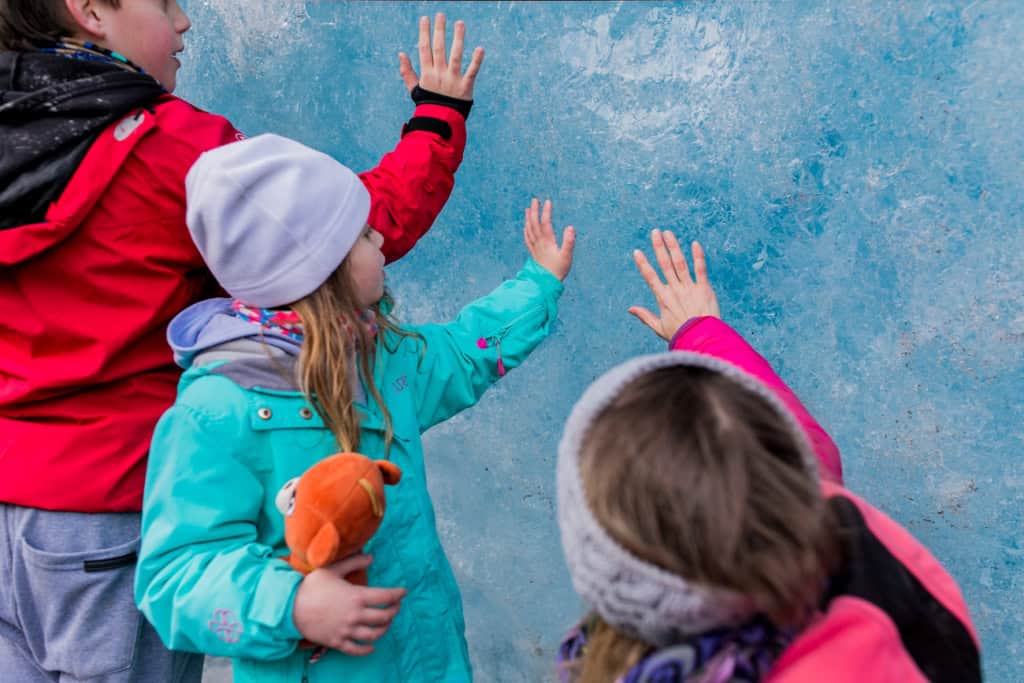
The short answer is yes, El Calafate in winter is perfectly viable with children — with adequate planning. It's not a "beach" destination where the cold ruins the plan: here the experience is the glacier, and the glacier has no age restriction.
Which excursions are suitable for children in winter
| Excursion | Suitable for children? | Minimum recommended age | Notes |
|---|---|---|---|
| Perito Moreno Walkways | ✓ Yes | All ages | Accessible walkways, family-friendly route |
| Safari Azul (boat trip) | ✓ Yes | All ages | Boat with enclosed heated deck |
| Minitrekking on the ice | Partial | From 10-12 years | Requires crampons, walking on ice |
| Big Ice | ✗ No | Does not operate in winter | Does not operate June-August |
| Laguna Nimez | ✓ Yes | All ages | Ideal for children curious about animals |
| Full Day El Chaltén | Partial | From 6-8 years (long journey) | 4 hours each way, variable weather, check availability |
Clothing for children — The critical point
With children the clothing issue is even more important than with adults: kids complain less about the cold until suddenly they're hypothermic. The key is the layering system, same as for adults, but with special attention to:
- Thermal base layer: Indispensable. Children sweat more and if their underwear is cotton it retains moisture and chills them. Use merino wool or thermal synthetic.
- Children's down jacket: Much lighter than thick sweaters and twice as warm. Children's brands (North Face, Columbia, Patagonia kids) have compact options.
- Hat that fully covers the ears: Young children hate wind in their ears. A wool hat that comes down well solves the problem.
- Gloves with good wrist coverage: Gloves that leave the wrist exposed don't work with Patagonian wind.
- Waterproof footwear with grip soles: If there's snow or mud on the way to the glacier, canvas shoes are a disaster. Waterproof ankle boots or boots.
What to do when the weather doesn't cooperate
If one day there's too much wind or heavy snow and you decide to stay in town, there are genuinely interesting alternatives for children:
- Laguna Nimez: Even with mild cold, flamingos and swans fascinate kids. The circuit is 1 hour, manageable for any age.
- Santa Cruz Cultural Center: Located in the town center, it has displays on Patagonian history, local fauna and some interactive exhibits.
- Chocolate shops and cafes in the center: Hot chocolate with pastries at a cozy cafe is an unbeatable plan when it's snowing outside. Kids love it.
- Central square and town surroundings: If it's lightly snowing, children can have their own snow experience — something not all Argentine children have frequently.
💡 Age recommendations for Patagonian winter:
— 0-3 years: Possible but demanding. The cold and wind are very intense at the glacier. The Walkways are technically accessible but you need to be very well dressed and carry the baby in a warm baby carrier.
— 4-9 years: A great age. The Walkways are perfect, the Safari Azul fascinates them, Laguna Nimez is ideal. Plan shorter days than for adults.
— 10 years and older: No restrictions. They can do the Minitrekking, all walkway circuits and Safari Azul without problems. At this age the winter glacier experience is unforgettable.
Argentine families who travel during the July school holiday week discover that winter El Calafate is an excellent family destination precisely because there are no beach options competing: all attention goes to the glacier and the town, and that focuses the experience. Children who see Perito Moreno for the first time in winter, with the silence and intense blue, tend to be more impressed than those who see it in summer surrounded by hundreds of tourists.
Where to stay in El Calafate: Apart Mundo Austral
Brand-new apartments in the heart of El Calafate. Full kitchen, WiFi, Smart TV + Netflix, central heating and free private parking. Minimum 3 nights. From $50,000 ARS/night (up to 2 people).
By staying with Mundo Austral you can book your excursions directly with the agency — no middlemen, at the best price.
View Apart and availability → 💬 Contact via WhatsApp
Packages and Combos in El Calafate
If you want to make the most of every day and save money, Mundo Austral has packages that combine airport transfers + excursions. Buying the combo works out better than booking each thing separately.
Frequently asked questions
Patagonian winter is waiting for you
Fewer tourists, bluer ice, lower prices. The glacier is just as impressive in July as in January. Only in July it's almost all yours. Check out all excursions in El Calafate available in winter.