The first thing you need to know — Passport required
This is the most important difference compared to other excursions from El Calafate: you need a valid passport. The Argentine DNI is NOT sufficient to enter Chile at this border crossing. Make sure your passport has at least 6 months of validity from the date of travel.
🚨 Warning: Many tourists miss the excursion because they show up without a passport or with an expired one. The immigration control at Cerro Castillo is strict. There are no exceptions. If you have any doubts about the required documentation, contact us before booking.
Citizens of most Latin American countries enter Chile without a visa. Citizens of the USA, Canada, Australia and some other European and Asian countries also enter without a visa. Check the current immigration requirements at the Chilean Consulate or on the official website of Chile's Servicio Nacional de Migraciones.
Chilean customs is very strict about animal and plant products. Absolutely prohibited: fruit, vegetables, meat, cold cuts, cheese, dairy products, home-baked bread and any agricultural produce. You may bring industrially packaged snacks (cereal bars, chocolates) but nothing fresh. The customs' trained dogs detect any undeclared food item.
Day programme — 17 hours of Patagonia
- 6:00 am — Departure from El Calafate. Hotel pick-up from 5:30 am.
- 6:00–8:00 am — Drive along Route 40 to the Cancha Carrera border crossing (Argentina). The guide welcomes the group and explains the border procedure.
- 8:00–8:30 am — Argentine immigration control (Cancha Carrera) then Chilean control (Villa Cerro Castillo). The guide coordinates the group to speed up the crossing.
- 8:30–10:00 am — Drive through Chilean territory to the park entrance. First stop: Laguna Amarga (flamingos, guanacos, first view of the Torres).
- 10:00 am — Entry to Torres del Paine National Park. Park fee payment.
- 10:00 am–2:00 pm — Visit to the main highlights: Las Torres viewpoint, Lake Nordenskjöld, Los Cuernos del Paine, Valle del Francés (from the viewpoint).
- 2:00–3:30 pm — Lunch at the Lake del Paine restaurant or packed lunch at the Salto Grande viewpoint.
- 3:30–5:30 pm — Visit to Salto Grande waterfall on the Paine River, Lake Pehoé and the Cuernos viewpoint.
- 5:30–6:00 pm — Park exit, return to the border crossing.
- 6:00–6:30 pm — Border crossing back to Argentina.
- 6:30–10:00 pm — Return to El Calafate along Route 40.
- 10:00–11:00 pm — Arrival in El Calafate.
What you'll see — The park's icons
The Torres del Paine
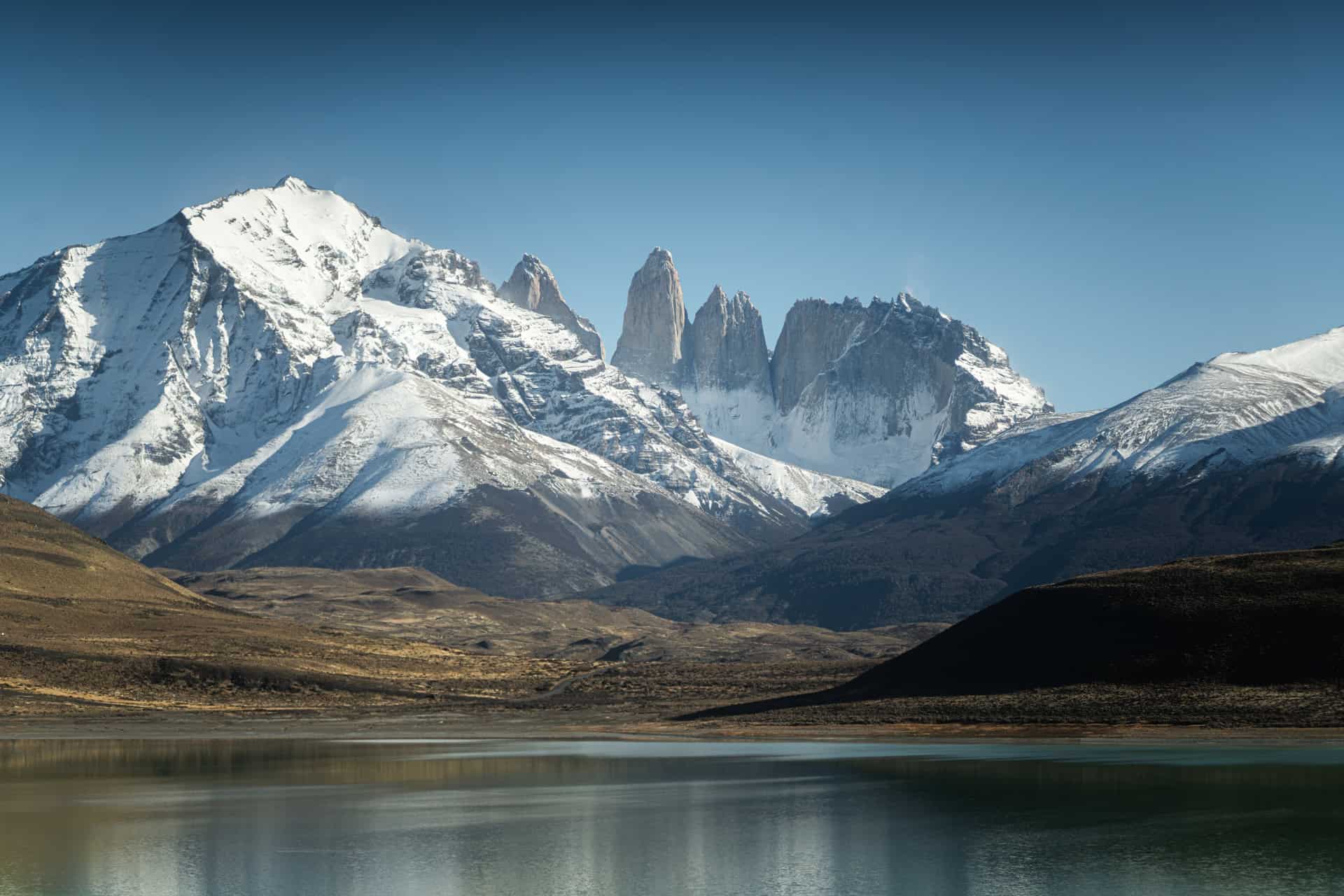
The three vertical granite towers that give the park its name are quartzite monoliths standing over 2,500 metres high. They formed about 12 million years ago when granitic magma intruded between layers of sedimentary rock, cooled slowly, and was exposed by glacial erosion. The colour contrast — light grey granite at the summits and dark sedimentary rock at the bases — creates a visual palette unique in the world.
From the full day excursion they are seen from the viewpoints in the lower part of the park. To reach the base of the Torres requires an 8–9 hour round-trip trek that is not possible in this format.
Los Cuernos del Paine
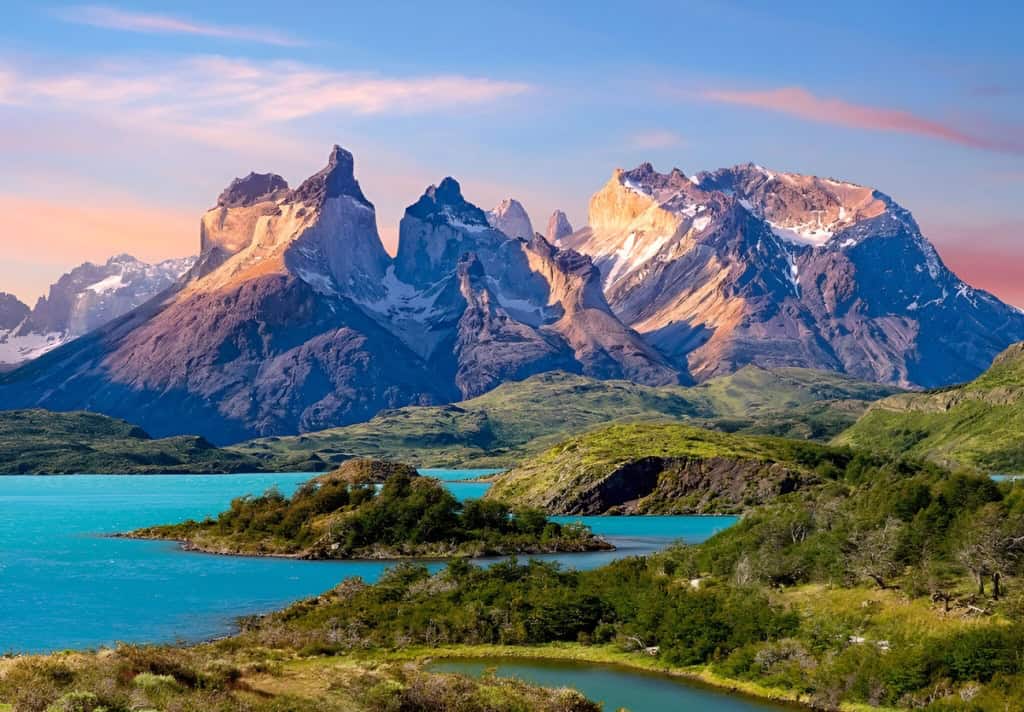
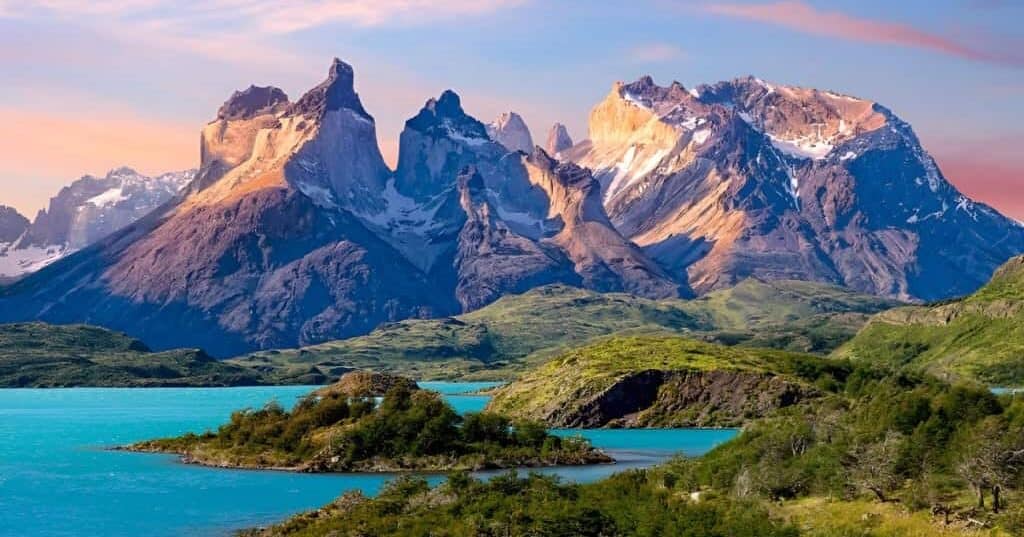
If the Torres are the park's protagonists, Los Cuernos are the supporting players that steal the scene. They are three dual-coloured peaks: a black slate base and a grey granite summit. The contrast is photogenic and unique. Lake Nordenskjöld in front of them offers the park's most photographed reflection.
Lake Nordenskjöld and Lake Pehoé
The park's lakes have that impossible turquoise colour common to all glacial lakes in Patagonia. Nordenskjöld is the largest (30 km long) and offers the best views of Los Cuernos. Pehoé is smaller but has perfect lighting at sunset.
Salto Grande waterfall on the Paine River
The Paine River connects Lake Nordenskjöld with Lake Pehoé through a waterfall about 10 metres high that is particularly spectacular during the spring snowmelt. There is a wooden walkway that lets you get up close and feel the spray.
Wildlife in Torres del Paine — What can you see?
Chilean flamingos (Phoenicopterus chilensis)
The first stop of the day is usually Laguna Amarga, which for much of the year has colonies of pink flamingos grazing in the shallow waters. They are most numerous in summer (October–February).
Guanacos (Lama guanicoe)
Torres del Paine has one of Patagonia's densest guanaco populations, with thousands of animals. They are completely used to humans — especially the young (called chulengos) — and it is very likely the bus will stop several times because a guanaco decided to cross the road.
Andean condors
The thermal currents around the Torres create perfect conditions for condors. With a wingspan of up to 3.2 metres, soaring over the granite walls, they are among the most impressive animals in the park.
Patagonian puma (Puma concolor patagonica)
Torres del Paine has one of the world's highest puma densities thanks to the abundance of guanacos. However, on a one-day excursion the chances of seeing one are low (10–20%). Sightings are more frequent at dawn and dusk, in areas away from the main tracks.
Wildlife photographers from around the world come specifically to Torres del Paine to photograph pumas. Some rent 4x4s and spend weeks in the park to get the perfect shot. If on your full day from El Calafate you see a puma, consider it an extraordinary gift from Patagonia.
What to bring and what you cannot bring
- Valid passport (essential)
- Windproof waterproof jacket
- Fleece or warm layer for the cold by the lake
- Sunscreen and sunglasses
- Camera / binoculars for wildlife
- Chilean pesos or dollars for the park entry fee
- International debit/credit card
- Packaged snacks (cereal bars, dried fruit)
- Refillable water bottle
- Fresh fruit and vegetables (Chilean customs will confiscate them)
- Meat, cold cuts and cheese (prohibited by customs)
- Home-baked bread or artisan bakery products
- Pets (not allowed in the park)
- Drones without prior CONAF permit
Prices and what is included — 2026
Excursion price: $230,000 ARS per person.
Included:
- Round-trip transfer El Calafate – Torres del Paine
- Bilingual Spanish/English guide
- Border crossing management
- In some cases, lunch at the park restaurant
Not included:
- Torres del Paine National Park entry fee (paid in Chilean pesos or USD at the gate)
- Lunch (if not specified in the package)
- Additional activities inside the park (boat on the lake, guided trekking)
⚠️ Torres del Paine National Park has a tiered entry fee: Chilean residents pay less than foreigners. The price for foreign tourists is approximately USD 38 per person in high season (2026 update). Check the latest price on the official CONAF Chile website.
Best time to go
The excursion operates from October to April. In winter (May–September) it does not run from El Calafate because the park reduces its operations and conditions at the border can be difficult.
- December – February: High season. Long days (daylight until 10:00 pm), park at its peak, but also more tourists. The park can be very crowded.
- October – November: Good conditions, fewer tourists than in summer, spring colours. Windier.
- March – April: Our favourite time. Exceptional autumn colours, fewer tourists, more moderate winds and lower prices for accommodation and excursions.
Torres del Paine vs El Chaltén — Which one to choose?
If you are planning your excursions from El Calafate and have to choose between Torres del Paine and El Chaltén, the honest answer is: they are completely different experiences, and if you can do both, do both. But if you have to choose one, here is everything you need to decide.
💡 Golden rule: If you can do both, do both — they are complementary and completely different. If you can only do one, El Chaltén requires no passport and gives more trekking freedom. If wildlife is your priority and you have a valid passport, Torres del Paine is unbeatable.
Comparison table: Torres del Paine vs El Chaltén
| Feature | 🇨🇱 Torres del Paine | 🇦🇷 El Chaltén |
|---|---|---|
| Country | Chile | Argentina |
| Distance from El Calafate | ~330 km (4 hrs including border) | ~220 km (2.5 hrs) |
| Required documents | Valid passport (mandatory) | DNI only (for Argentines) |
| Landscape type | Granite towers, turquoise lakes, glaciers, steppe and forest | Fitz Roy and Cerro Torre, glacial valleys, lenga beech forests |
| Trekking from the excursion | Accessible viewpoints, short 1–2 hr walks | Free: you can do Laguna de los Tres (7–8 hrs) on your own |
| Star wildlife | Puma, guanaco, flamingo, condor | Condor, huemul, guanaco, Patagonian birds |
| Excursion price 2026 | $230,000 ARS + entry fee | $120,000–$112,000 ARS (more affordable) |
| Best season | October–April | November–April |
| Family-friendly | Yes (stops are accessible) | Yes, with optional walks depending on fitness |
When to choose Torres del Paine?
Torres del Paine is the right choice if wildlife is your absolute priority. The park has Patagonia's highest puma density, pink flamingos in the lagoons, and thousands of guanacos that sometimes block the road. The landscapes are more dramatic and varied: vertical granite, lakes of impossible colours, glaciers and steppe. It is more touristy and more developed than El Chaltén, which can be an advantage or a disadvantage depending on your profile.
When to choose El Chaltén?
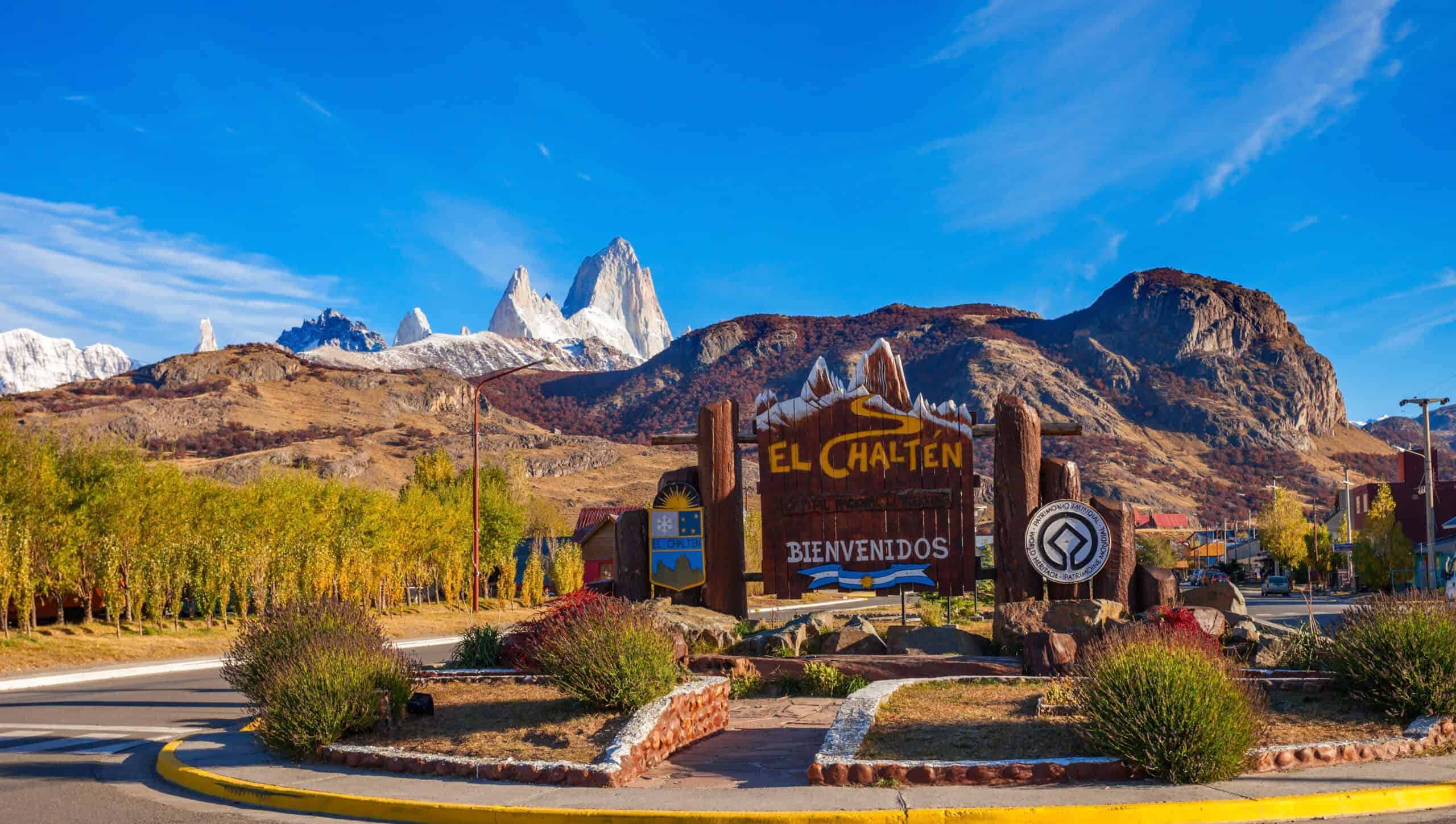
El Chaltén is wilder, closer and more flexible. You do not need a passport (for Argentines and many Latin Americans), you get there faster, and most importantly, you have total trekking freedom: the bus drops you in the village and you can do whatever hike you feel like. Laguna de los Tres, with Fitz Roy right in front of you, is one of the most accessible and spectacular treks on the continent.
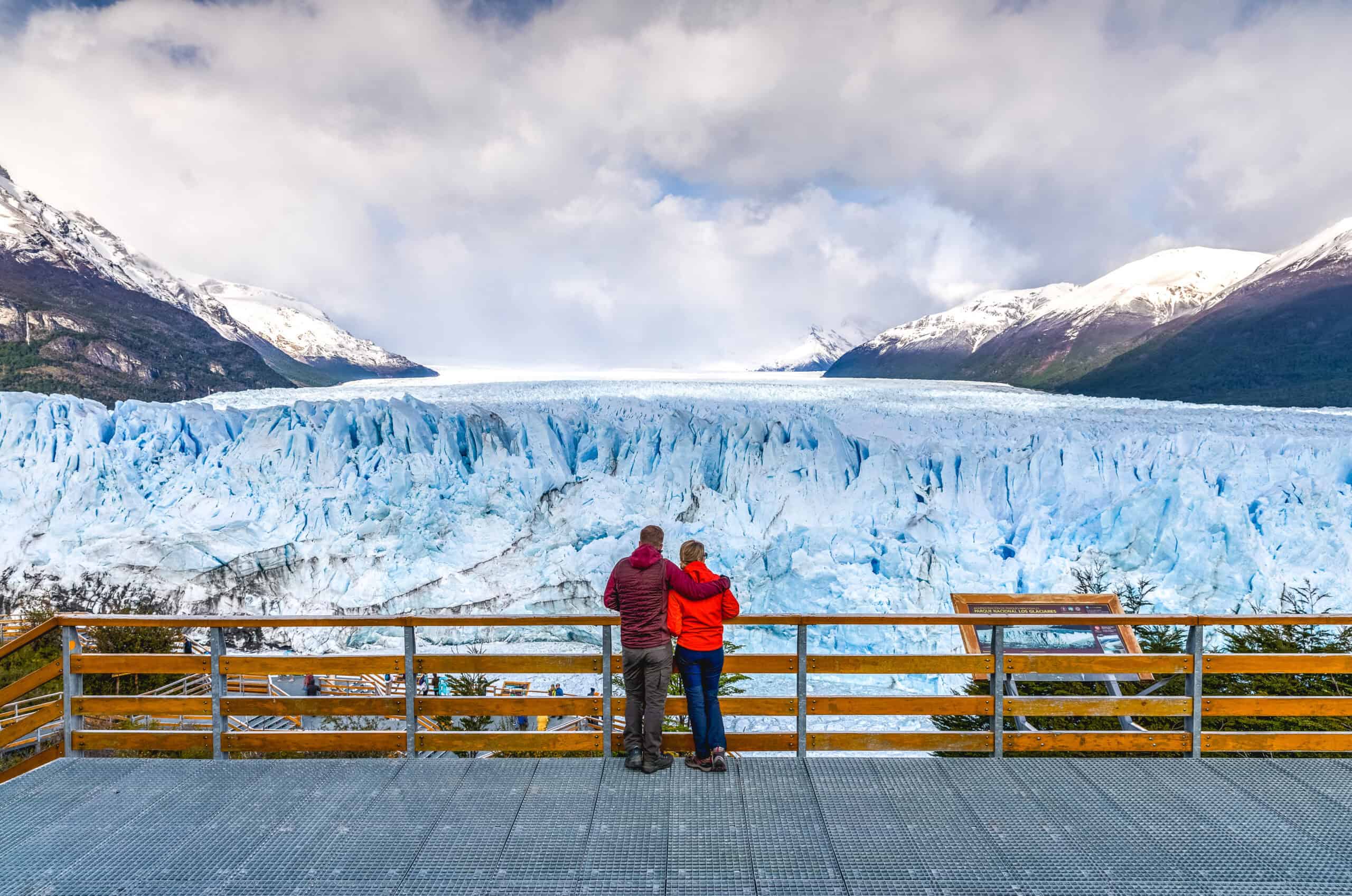
If you only have one excursion day and it is your first time in Patagonia, the Perito Moreno Glacier usually wins the debate — it is the absolute icon of El Calafate and a unique experience in the world. If you have already seen it or have two days, do one day in Paine and one in Chaltén. You will never regret it.
The border crossing in detail
Crossing the Argentine-Chilean border to reach Torres del Paine is part of the experience, and for most visitors it turns out to be simpler than expected. Here is exactly what happens so you will not be caught off guard.
The two border crossings
On the El Calafate – Torres del Paine route you cross two border controls, one per country:
- Cancha Carrera (Argentine side): immigration control by Argentina's National Gendarmerie. This is where you get your exit stamp.
- Villa Cerro Castillo (Chilean side): immigration control by Chile's Investigations Police (PDI) and phytosanitary control by the SAG (Agricultural and Livestock Service). This is where you get your Chile entry stamp and your luggage is checked.
On the way back, the process is reversed: you exit Chile through Cerro Castillo and enter Argentina through Cancha Carrera.
What documents do you need?
The requirement is simple and has no exceptions: a valid passport. The Argentine DNI is not valid for crossing this border. Citizens of Latin American countries (Uruguay, Brazil, Paraguay, Bolivia, Peru, Colombia, etc.) also need a passport to enter Chile at this crossing. Citizens of European, North American and other non-regional countries must likewise present a valid passport.
⚠️ What happens if your passport is rejected? It is a very rare but possible situation: expired passport, a damaged passport that the reader cannot scan, or some issue in the immigration system. In those cases, the guide cannot do anything to help you cross — immigration decisions are made by the border staff and are non-appealable on the spot. Check the validity and physical condition of your passport before leaving El Calafate.
The Chilean customs process (SAG)
Chilean SAG phytosanitary control is the strictest in South America and has a real ecological purpose: protecting the Chilean agricultural ecosystem from pests and diseases. The SAG's trained dogs detect undeclared food with high accuracy.
What the SAG confiscates without exception:
- Fresh fruit and vegetables of any kind
- Meat, cold cuts and deli meats (even if vacuum-packed)
- Cheese and dairy products
- Artisan bread and home-baked goods
- Seeds and plants
- Honey and bee products
What you can bring: industrially packaged snacks (chocolates, cereal bars, factory-packaged biscuits), bottled mineral water, and medications (with a prescription if controlled).
How long does the crossing take?
In total, the outbound crossing process (Argentina + Chile) takes between 30 and 60 minutes depending on the time of year and the number of vehicles at the crossing. The guide coordinates the group and organises the documents to speed up the process.
The Cerro Castillo crossing is relatively quick because it is a pedestrian border in a remote area — it does not have the congestion of Paso Los Libertadores or Paso Cardenal Samoré. In high season (January–February) it can take up to 45 minutes; outside of peak season, you're through in 20 minutes. The guide knows the quieter times and that's partly why the bus leaves so early.
For non-Latin American travellers
Citizens of the USA, Canada, Europe, Australia, New Zealand and most Asian countries enter Chile without a visa for tourist stays of up to 90 days. However, they must complete the Tourist Card (TMCE) issued at the crossing. The guide has the forms available on the bus. Keep the stub of the card because you will be asked for it when leaving Chile.
The park's best viewpoints

Torres del Paine has dozens of viewpoints, but on a full day excursion from El Calafate the time inside the park is about 7–8 hours. These are the points normally covered by the itinerary and what you will find at each one:
Laguna Amarga — The park's gateway
This is the first stop upon entering the park. Laguna Amarga (named for the colour of the water, tinted by algae and minerals) is where the entry fee is paid and where Chilean flamingos are often present in large numbers. From here you also get the first frontal view of the Torres del Paine on the horizon. Time needed: 20–30 minutes.
Lake Nordenskjöld with Los Cuernos — The cover shot
If there is one image that defines Torres del Paine worldwide, it is this: turquoise Lake Nordenskjöld in the foreground, with Los Cuernos del Paine (black below, grey above) reflected in the water. On windless days the reflection is perfect. The lake is 30 km long and its waters come from the snowmelt of the Paine Grande glaciers. Time needed: 30–45 minutes to enjoy it properly and take photos.
Lake Nordenskjöld with Los Cuernos in the background is the cover photo of Torres del Paine. If the day is clear and you arrive between 10:00 am and 12:00 noon, the lateral southern light creates a reflection in the water that is out of this world. Bring a tripod if you're a photographer — long-exposure shots on this mirror of water are unforgettable.
Salto Grande waterfall on the Paine River — The sound of water
Salto Grande is the waterfall where the Paine River connects Lake Nordenskjöld with Lake Pehoé. Standing about 10 metres high with an impressive flow during snowmelt season (November–January), you can hear the sound of the water before you see it. There is a wooden walkway that lets you get within metres of the falls. Walking distance from the car park: 500 metres. Time: 30–40 minutes.
Lake Pehoé — Sunset at the end of the world
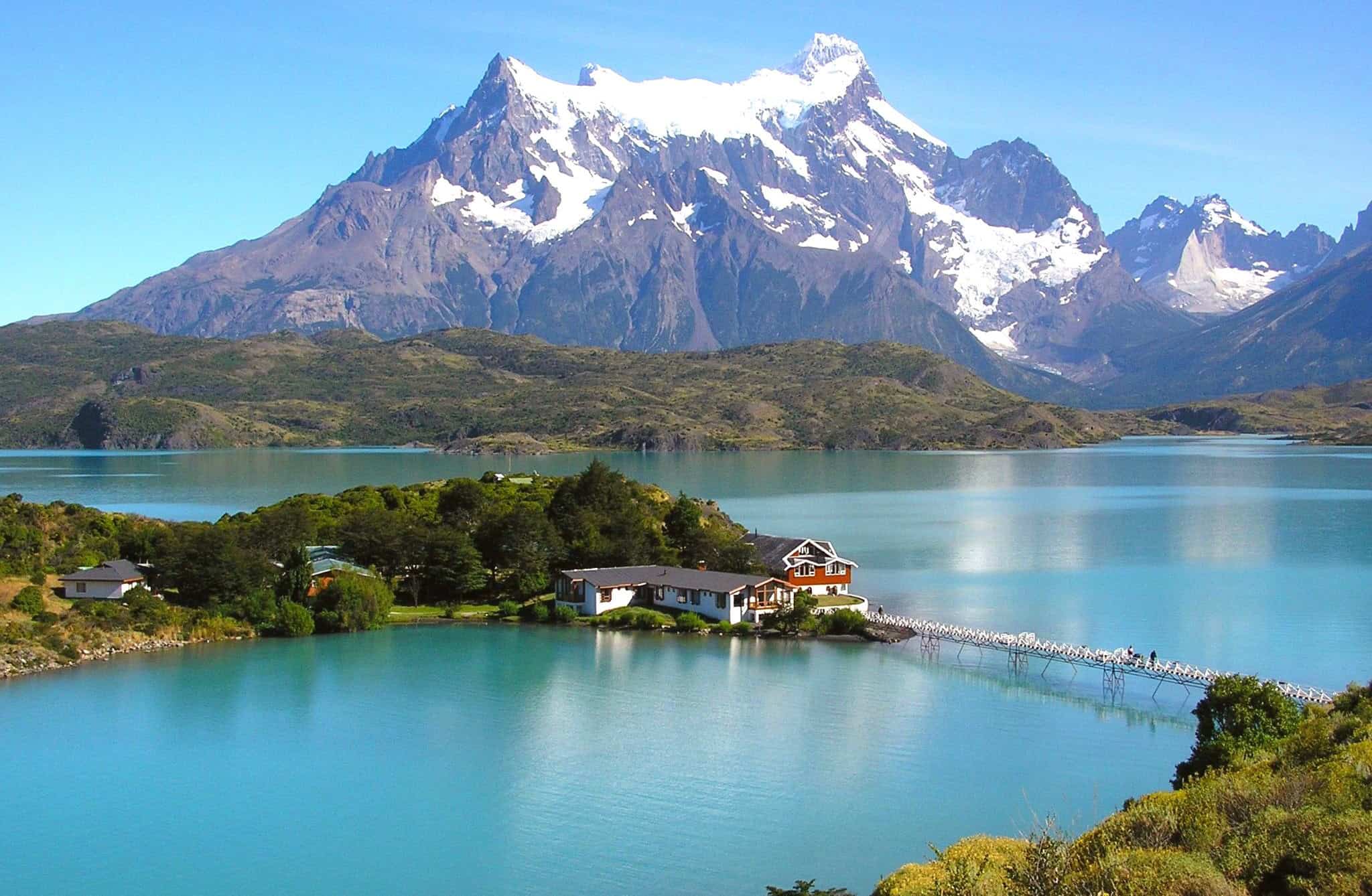
Lake Pehoé is smaller than Nordenskjöld but has an exceptional position facing the Paine Grande massif. On it sits the famous Hotel Lago Pehoé (an island connected by a walkway). Late in the afternoon, light falls on Paine Grande from the side and creates orange hues on the granite. Time needed: 20–30 minutes.
Mirador de los Cuernos
A stopping point on the shores of Lake Nordenskjöld with direct, unobstructed views of Los Cuernos. It is different from the lake viewpoint because here you can see the full scale of the peaks and the valley surrounding them. If time allows, there is a 20-minute round-trip walk to a higher level with better views of the whole scene. Time needed: 30 minutes.
Laguna Azul (if the itinerary allows)
Laguna Azul is in the northeast sector of the park and has one of the best reflections of the Torres del Paine because it views them from the opposite side to usual. It is not always included in full day itineraries from El Calafate due to time constraints, but if the group is ahead of schedule some guides add it as a bonus. Ask your guide.
Is Torres del Paine from El Calafate in one day worth it?
This is the most honest question you can ask and it deserves an honest answer: yes and no. Depending on who you are and what you expect, the answer changes. Here is the breakdown.
The real numbers of the day
The day lasts 16–17 hours. Of those, approximately:
- 8 hours on the bus (4 each way) — including the Chilean sections
- 1 hour at the border (30 min each way)
- 7–8 hours in the park — including lunch (1 hour)
In other words: you effectively have 6–7 active hours in the park. That is not nothing, but it is good to know in advance.
What you will see vs. what you will miss
What you will see: the main viewpoints (Laguna Amarga, Nordenskjöld, Salto Grande, Lake Pehoé), varied wildlife (guanacos almost certain, flamingos likely, condors possible, puma unlikely but possible), the border crossing as an experience in itself, the landscape of the Chilean Patagonian steppe and mountains, and the Torres del Paine from the lower viewpoints.
What you will miss: the W Trek (minimum 4–5 days), the base of the Torres (8–9 hours of round-trip trekking), the Valle del Francés from the inside (a full-day trek), Grey Glacier, the views from Refugio Chileno, and the experience of sunrise in the park. This is NOT the W Trek. It is a spectacular introduction to the park.
We are honest: the best way to see Torres del Paine is to stay 3–4 nights in the park and do the W Trek. The one-day excursion is fantastic but leaves you wanting more. And that is fine — it is what makes you come back. Many of the travellers who do the full day excursion return to Patagonia two years later specifically to do the W.
For whom DOES the full day excursion make sense?
- Travellers combining El Calafate + Ushuaia with limited time
- People for whom the W Trek is physically impossible or too demanding
- Travellers who want to "see" Torres del Paine at least once before deciding whether to return
- Families with children or older adults who enjoy the landscapes without extensive trekking
- Photographers who want the iconic viewpoints in good light conditions
For whom does it NOT make sense?
- People who already know Torres del Paine and want to go deeper inside
- Those who hate long bus rides or get motion sickness
- Trekkers who want to do the W or the O Circuit (that requires independent planning and several days)
- Travellers with reduced mobility who cannot handle 1–2 km walks on uneven terrain
💡 Honest conclusion: the full day excursion from El Calafate is NOT the best way to see Torres del Paine, but it IS a valid, beautiful and accessible way for those who cannot or do not want to do more. The views are real, the experience is memorable, and the park will leave a mark on you even if you see it from the bus window. You will not regret it.
What if you want to stay longer in Torres del Paine?
If the full day excursion leaves you wanting more — and it very likely will — the good news is that extending the trip to stay in the park is completely possible and not as complicated as it seems.
The hub: Puerto Natales
Puerto Natales is the city closest to the park (1 hour from the main entrance) and the logistical hub for all visitors doing the W Trek or the O Circuit. It has a varied hotel offering (from budget hostels to high-end lodges), excellent restaurants and all the outdoor gear shops you need for trekking.
From Puerto Natales there are regular buses to the park every day during high season. The Bus Fernández service and other operators depart at around 7:30 and 8:00 am and return at midday and at approximately 6:00 pm.
The W Trek — The full experience
The W Trek is the park's classic route, named after the W shape it traces between the main attractions. It requires 4 to 5 days of hiking with accommodation in refugios or camping. The refugios (Chileno, Los Cuernos, Francés, Paine Grande, Grey) fill up months in advance in high season — it is essential to book before travelling.
- Total distance: approximately 75–80 km
- Cumulative elevation gain: 3,500–4,000 metres
- Difficulty: moderate-high (you do not need to be an athlete but you do need good fitness)
- Bookings: vertice.cl or directly with the refugios
The O Circuit — For those who want it all
The O Circuit is the W Trek plus a section through the "dark side" of the park (the northern sector, less visited and wilder). It requires 8 to 10 days and is more demanding than the W. The reward: Paso John Gardner with a view down over Grey Glacier — a landscape very few people in the world ever see.
Middle option: day trekking from Puerto Natales
If you do not want to do the full W but want more than a full day excursion, you can stay 2–3 nights in Puerto Natales and enter the park each day on your own. The best day-trekking options:
- Base Las Torres: 8–9 hrs, the classic. You reach the foot of the Torres.
- Valle del Francés viewpoint: 5–6 hrs, impressive views of the Valley.
- Salto Grande + Lake Pehoé: 2–3 hrs, ideal for the first day.
Cost comparison: excursion vs. independent trip
| Option | Days | Approx. cost per person | What is included |
|---|---|---|---|
| Full day excursion from El Calafate | 1 day (Full Day from El Calafate) | from USD 163 | Bus, guide, border management |
| 3 nights Puerto Natales + day trekking | 4 days | Approx. USD 400–600 | Hotel, buses to the park, entry fees |
| W Trek (refugios) | 5–6 days | Approx. USD 800–1,400 | Refugios, entry fees, equipment |
💡 The perfect combo route: El Calafate (2–3 days, Perito Moreno) → full day excursion to Torres del Paine to see it → continue to Puerto Natales (1 hour by bus from the park entrance) and stay 2–3 nights for day trekking → bus from Puerto Natales to Punta Arenas and flight home. This way you see both sides of Patagonia without wasting time.
Where to stay in El Calafate: Apart Mundo Austral
Brand-new apartments in the heart of El Calafate. Full kitchen, WiFi, Smart TV + Netflix, central heating and free private parking. Minimum 3 nights. From $50,000 ARS/night (up to 2 people).
When you stay with Mundo Austral you can book your excursions directly with the agency — no middlemen, at the best price.
View Apartments & availability → 📱 Contact via WhatsApp
Packages and Combos in El Calafate
If you want to make the most of every day and save money, Mundo Austral has packages that combine airport transfers + excursions. Buying a combo works out better than booking each item separately.
Frequently asked questions
Cross the border and discover Torres del Paine
One of the most impressive landscapes on the planet, just 4 hours from El Calafate. Book ahead — spots are limited and fill up fast in high season.