
How the Perito Moreno Glacier was formed
The Perito Moreno Glacier began forming approximately 30,000 years ago, during the last great ice age that covered much of the Southern Hemisphere. During that period, ice gradually accumulated in the Patagonian Andes until it formed the Southern Patagonian Ice Field, one of the largest freshwater reserves on the planet outside the polar regions.
The process is slow and constant: snow falls in the high areas of the mountain range, compacts over the years under its own weight, and eventually turns into glacial ice. That ice flows downhill by gravity until it reaches Lago Argentino, where its journey ends.
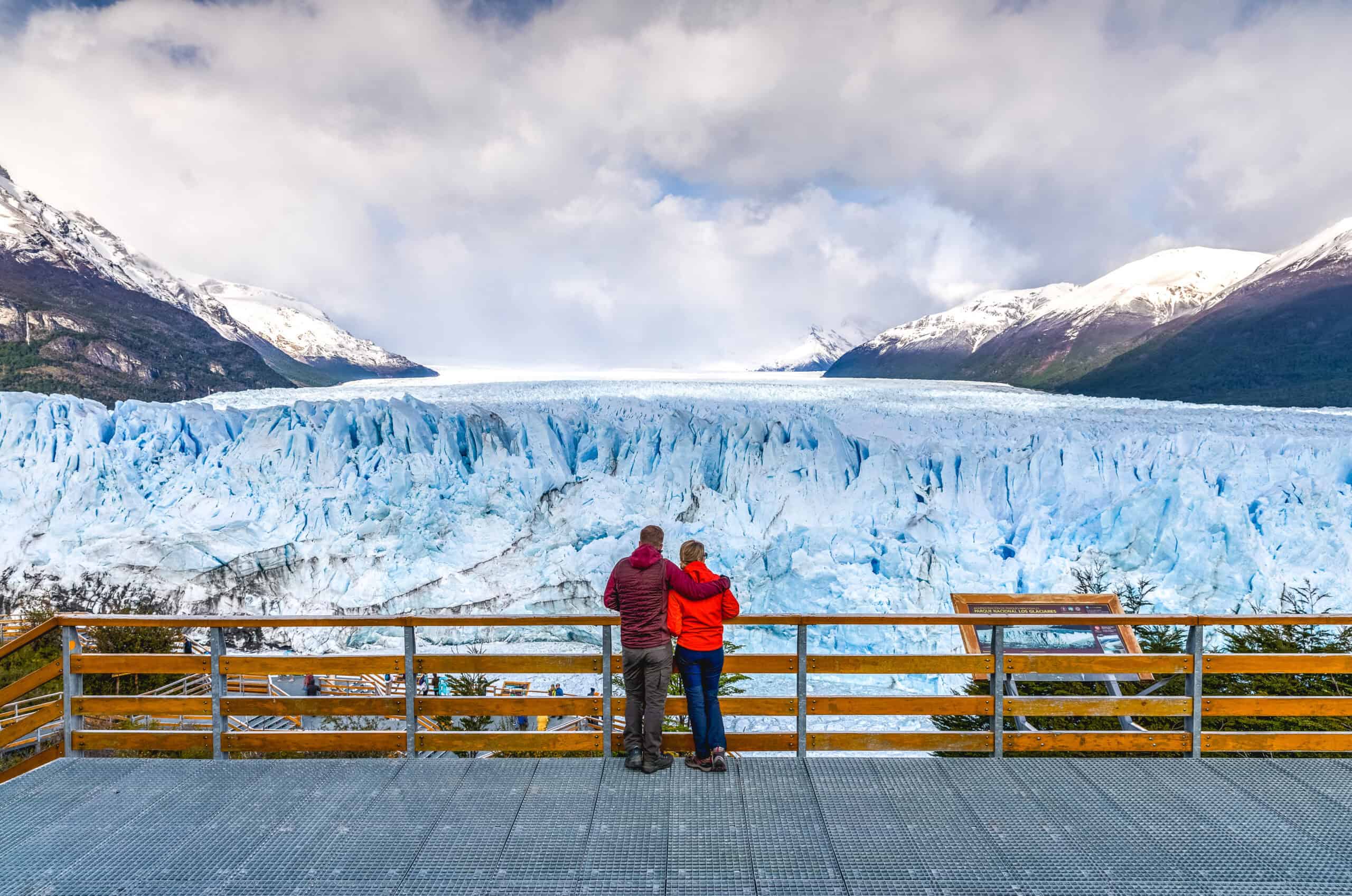
The Perito Moreno Glacier covers 257 km² (99 sq mi), stretches 30 km (19 miles) long, and rises between 55 and 74 meters (180–240 feet) above the lake level. It is one of only three glaciers in Patagonia that is not retreating.
Why it keeps advancing
What sets Perito Moreno apart from most glaciers in the world is that it keeps growing. While 97% of glaciers worldwide are retreating due to global warming, Perito Moreno maintains a balance between the snow accumulating in its upper zones and the ice calving off its face.
Scientists attribute this phenomenon to the unique geography of the Southern Patagonian Ice Field: precipitation in the mountains is exceptional — between 5,000 and 7,000 mm per year in the accumulation zones — continuously feeding the glacier from above and offsetting the ice it loses below.
The dynamics of advance: 2 to 3 meters per day
The glacier advances between 2 and 3 meters (6.5–10 feet) per day in its central zone, although that speed varies by season and sector. As it advances, the glacier front pushes the water of Lago Argentino toward the Canal de los Témpanos (Iceberg Channel), creating a natural ice dam that separates the southern arm from the rest of the lake.
The mystery of the blue ice
One of the first questions travelers ask when they see the glacier in person is: why is the ice blue? The answer lies in the physics of light and the structure of the ice.
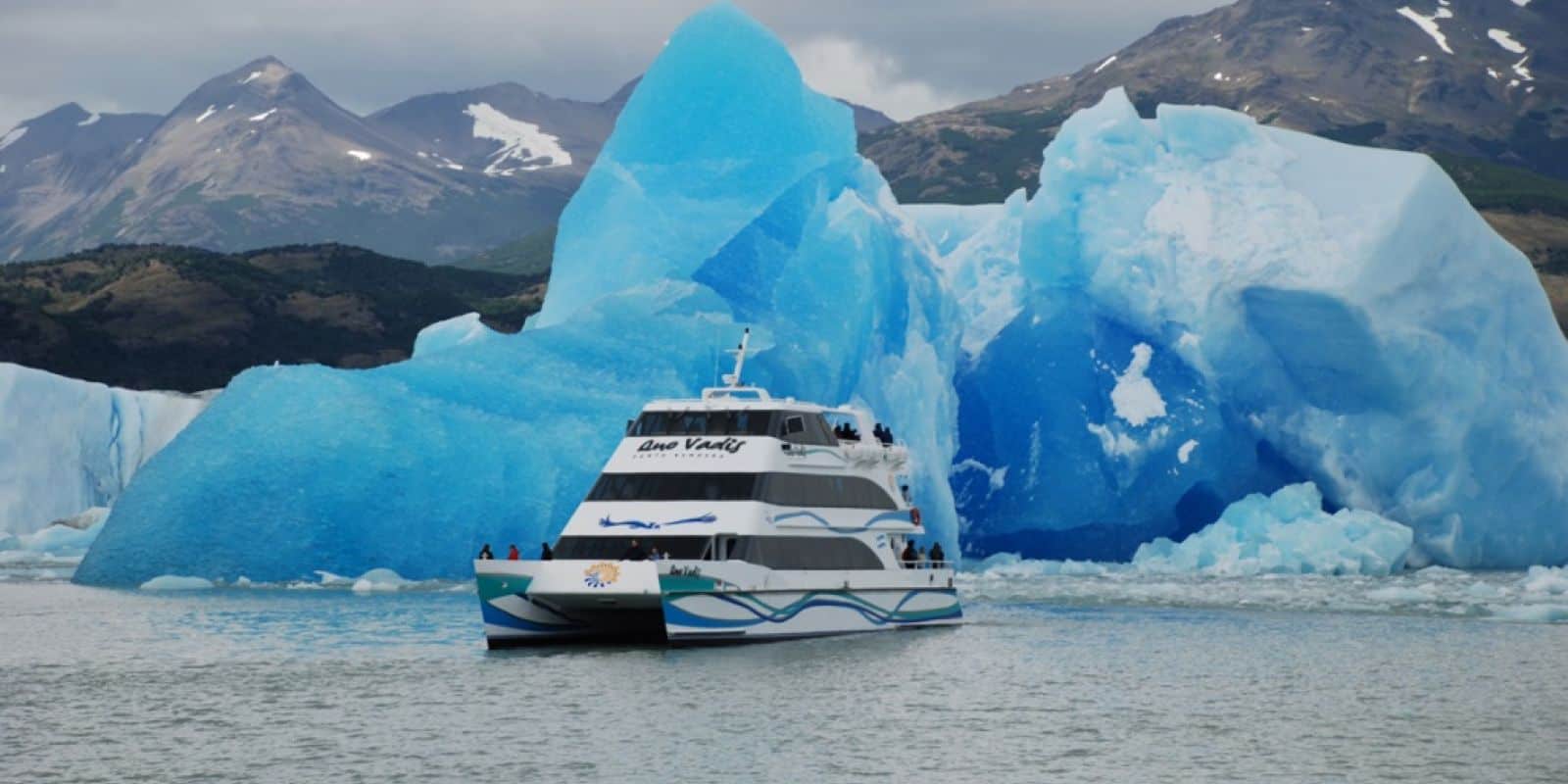
Glacial ice is far denser than ordinary ice. Over thousands of years of compaction, air is progressively squeezed out of the snow. Without air bubbles, the ice absorbs the red and infrared wavelengths of light and reflects mainly blue light, which is what we perceive. The older and more compact the ice, the more intense that blue color becomes.

💡 Fun fact: the ice you see today at the glacier's face formed from snow that fell more than 300 years ago. When a block breaks off and crashes into the lake, it releases water that has been frozen since the 17th century.
The rupture phenomenon
The rupture of the Perito Moreno Glacier is one of the most breathtaking natural spectacles in Patagonia. It happens when the glacier advances far enough to touch the Magallanes Peninsula, splitting Lago Argentino into two sections. The difference in water level between the two sides builds up hydraulic pressure that eventually shatters the ice dam in a thunderous collapse.
The process can take weeks or even months. The rupture is not always a single spectacular moment: it often happens gradually, with successive ice falls eroding the dam from below until it finally collapses.
Historically, ruptures occurred at intervals of several years. However, they do not follow a predictable schedule. The most recent one was documented at night, proving that it is impossible to predict the exact moment. Many travelers wait for days without seeing it; others witness it by pure chance on their very first visit.
The glacier and climate change
The Perito Moreno Glacier is intensely studied by glaciologists from around the world precisely because its behavior is an exception to the rule. While 97% of Patagonian glaciers are retreating at an accelerating pace, Perito Moreno maintains its balance, making it an invaluable natural laboratory for understanding ice dynamics in the Southern Hemisphere.
However, scientists warn that this balance is not guaranteed forever. Temperatures in Patagonia have risen between 0.5 and 1°C over recent decades, and although the glacier still offsets that loss with high-altitude snowfall, long-term climate models are not optimistic.